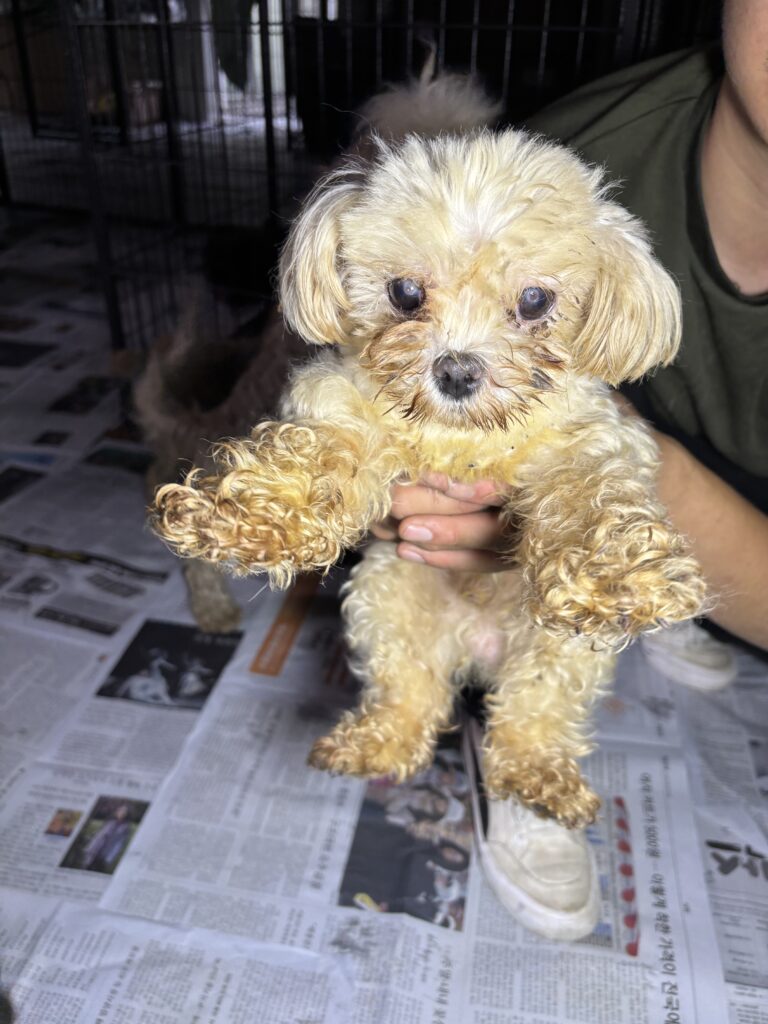
Hero img

Pyeongtaek Mommy and Son: From Years on the Streets to Safety
Pyeongtaek Mommy and Son: From Years on the Streets to Safety

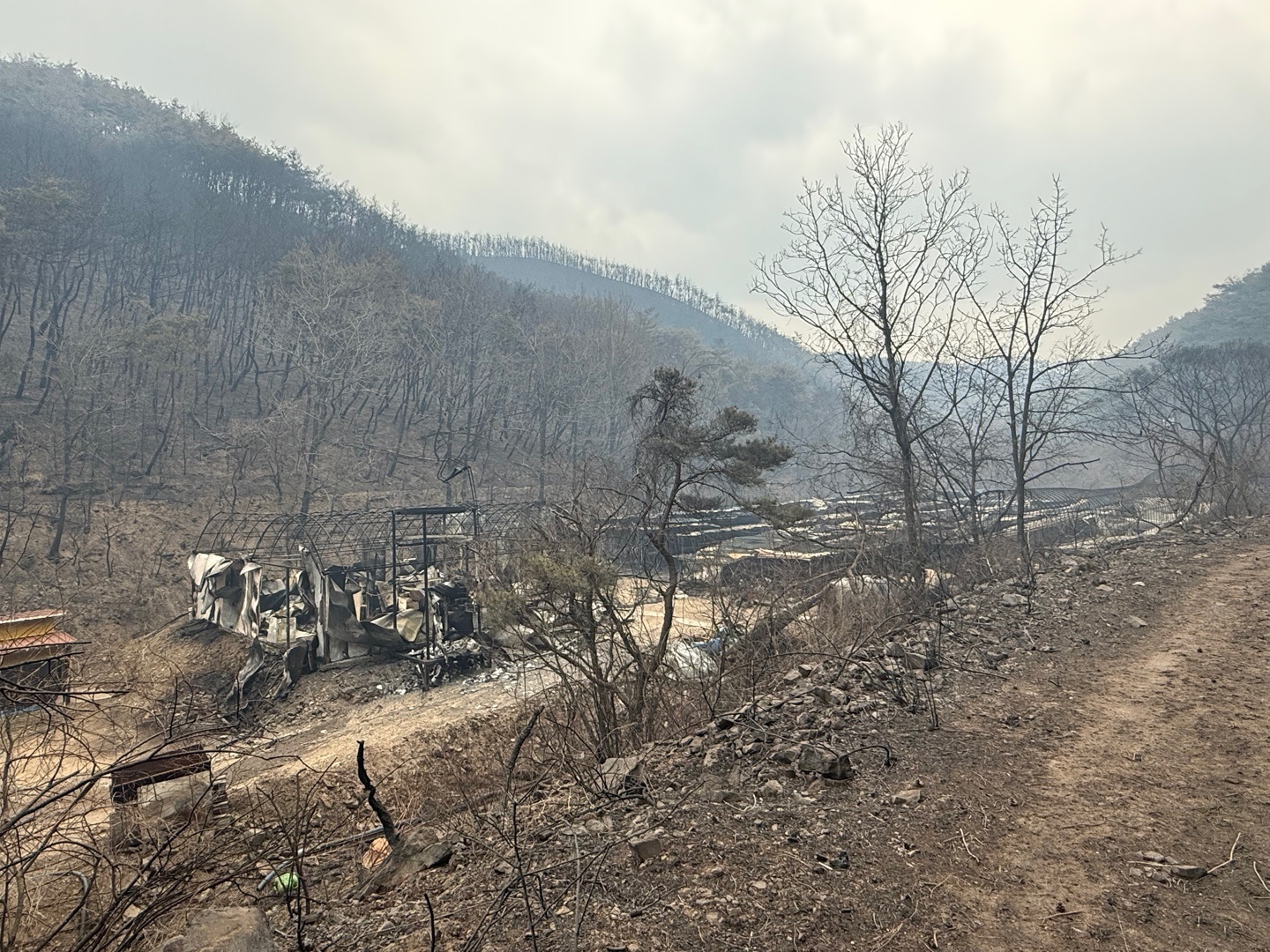
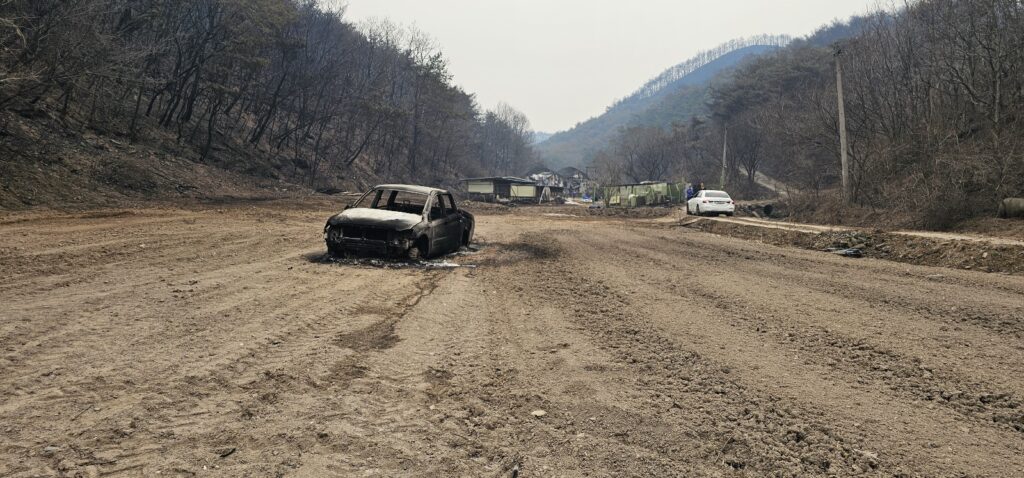
This was our last rescue mission of the year, and it happened on Christmas Day.

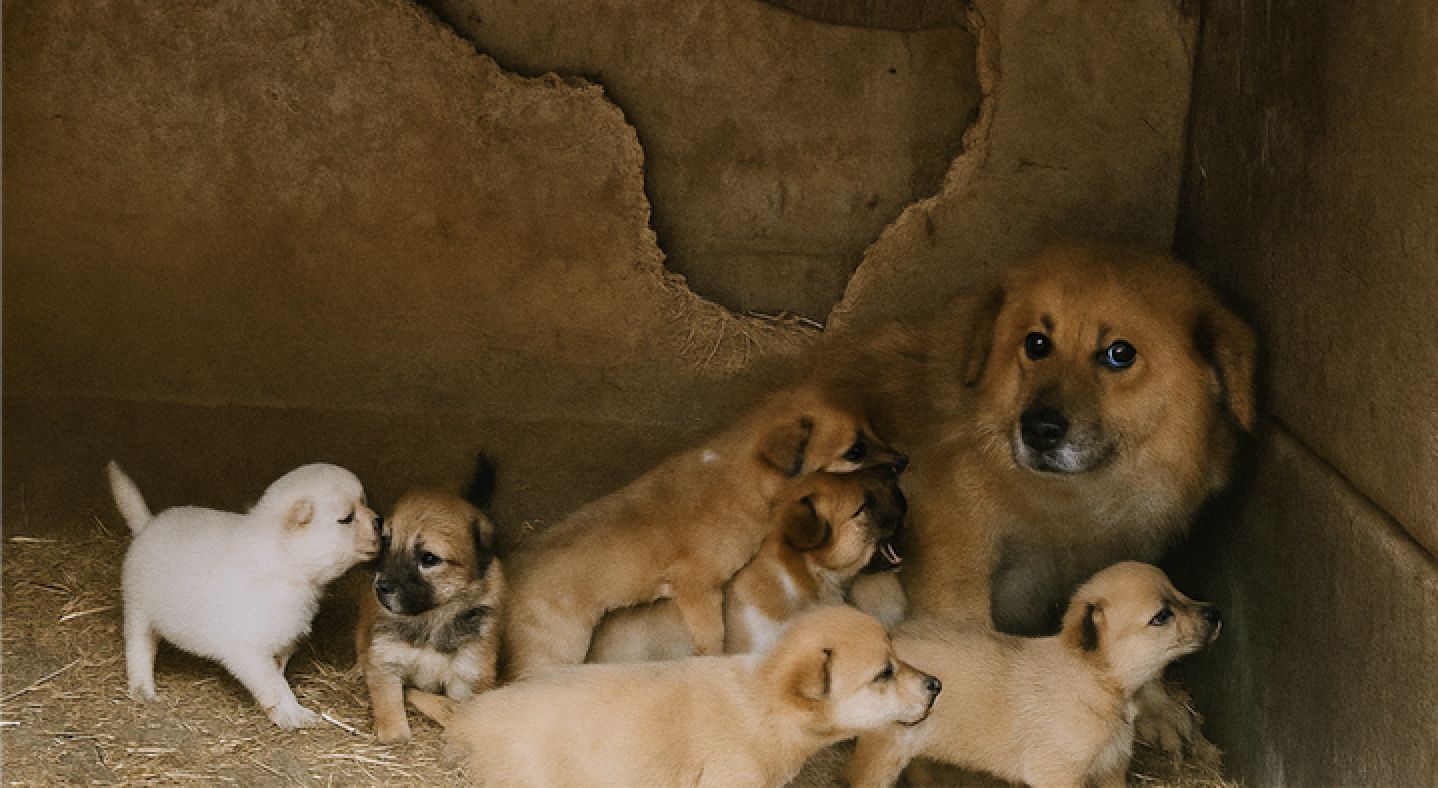
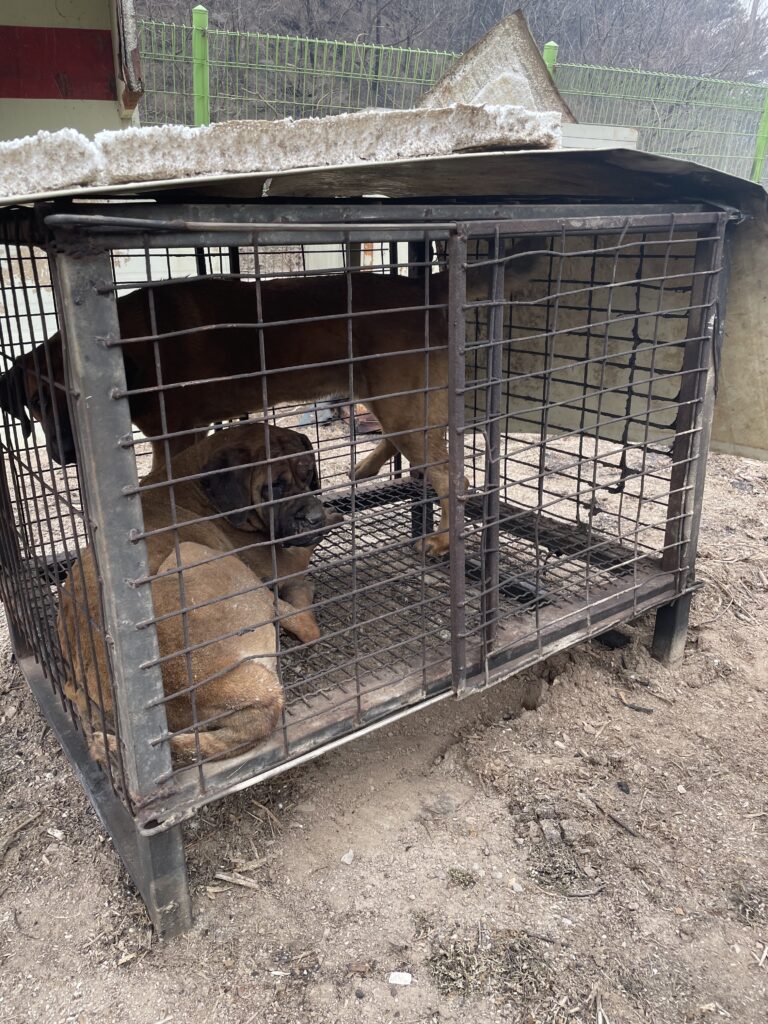
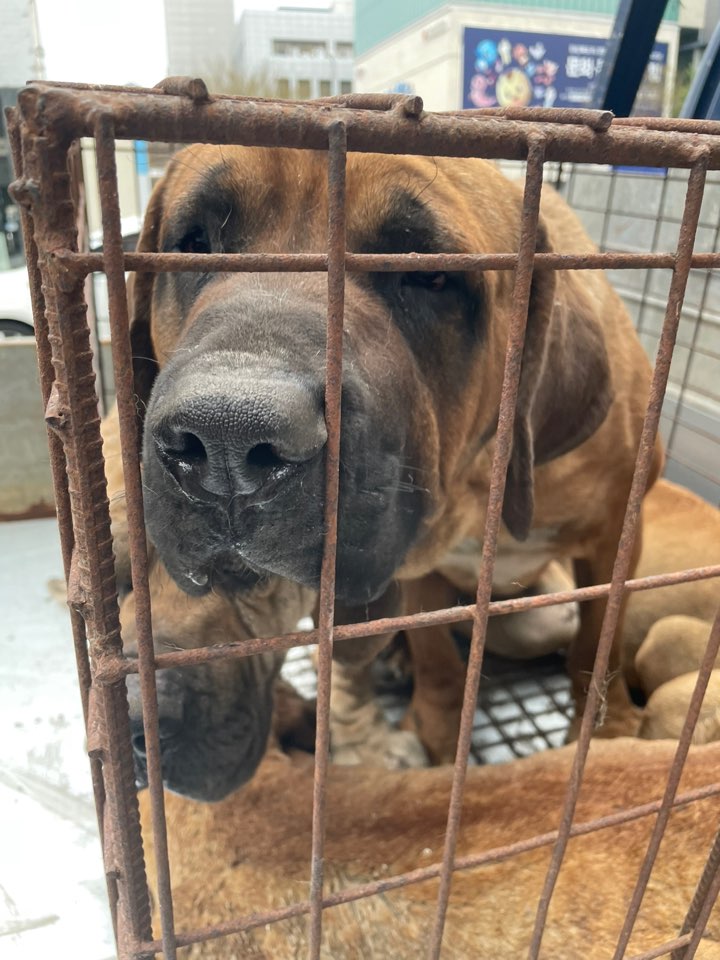
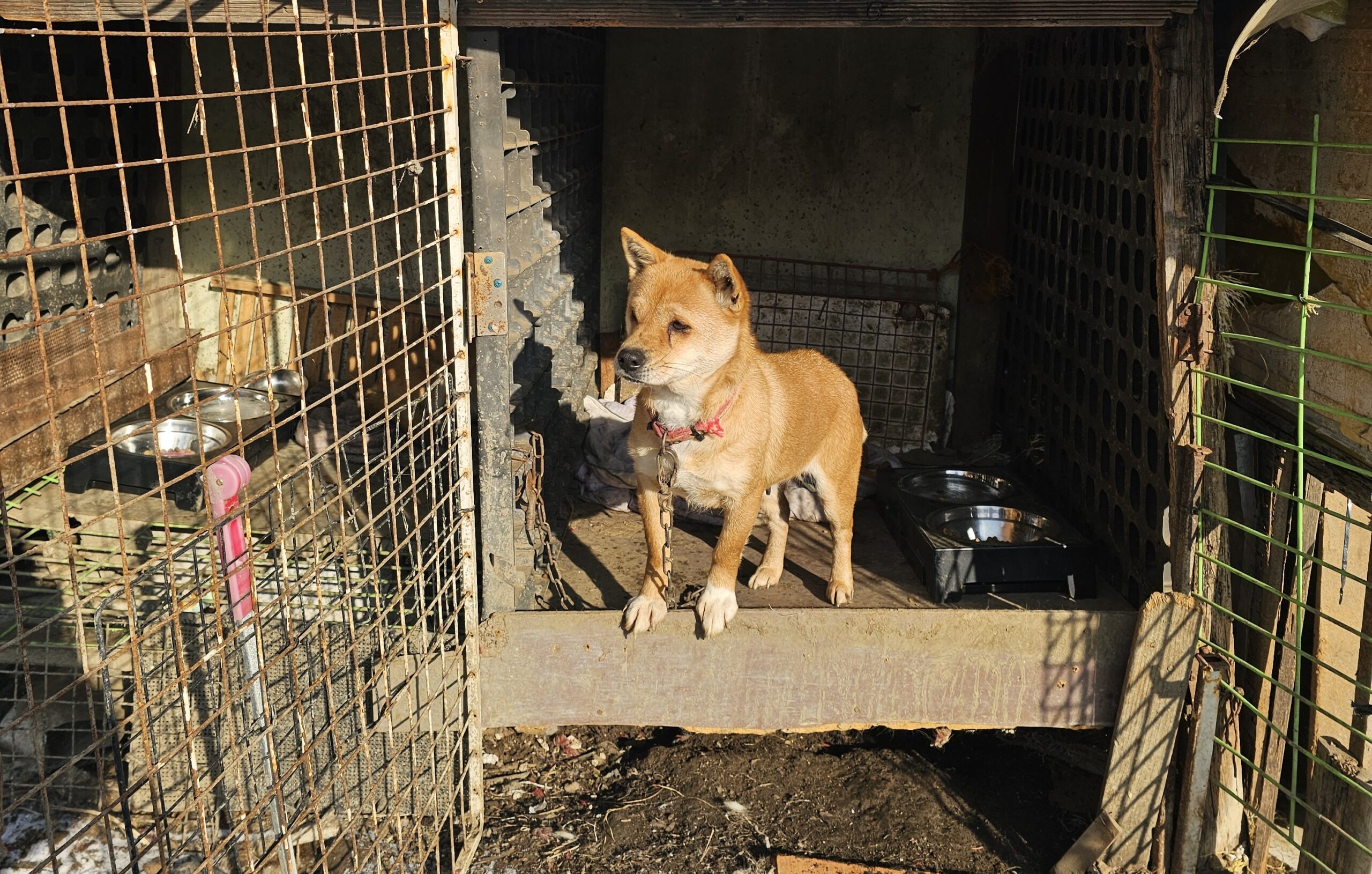
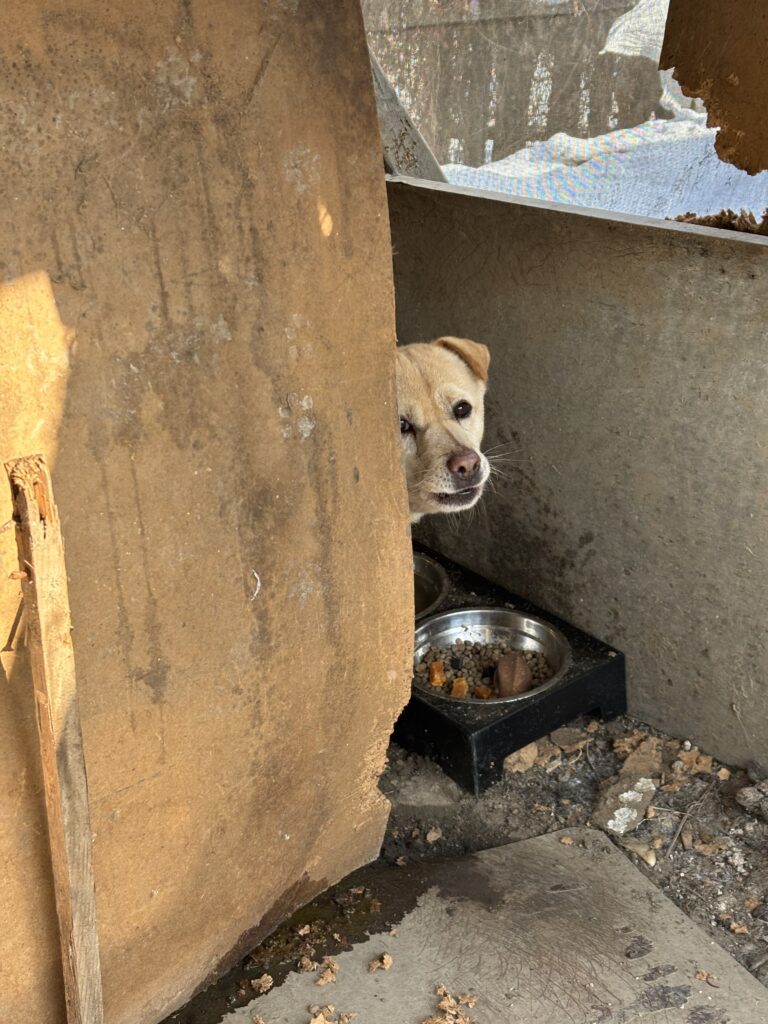
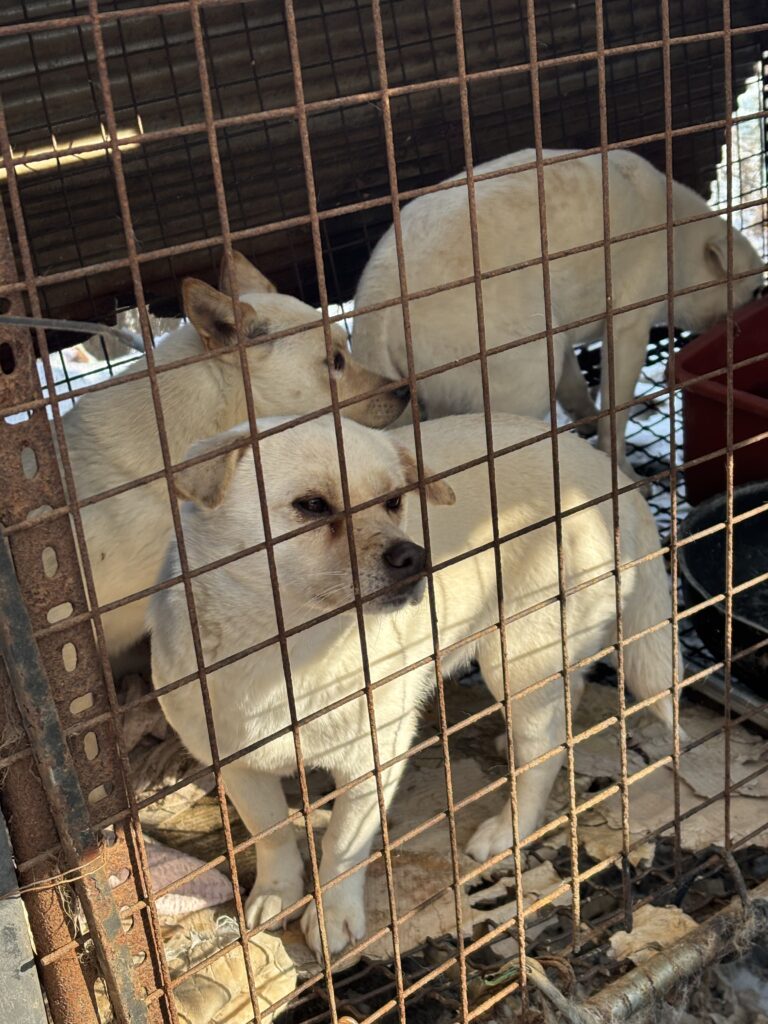
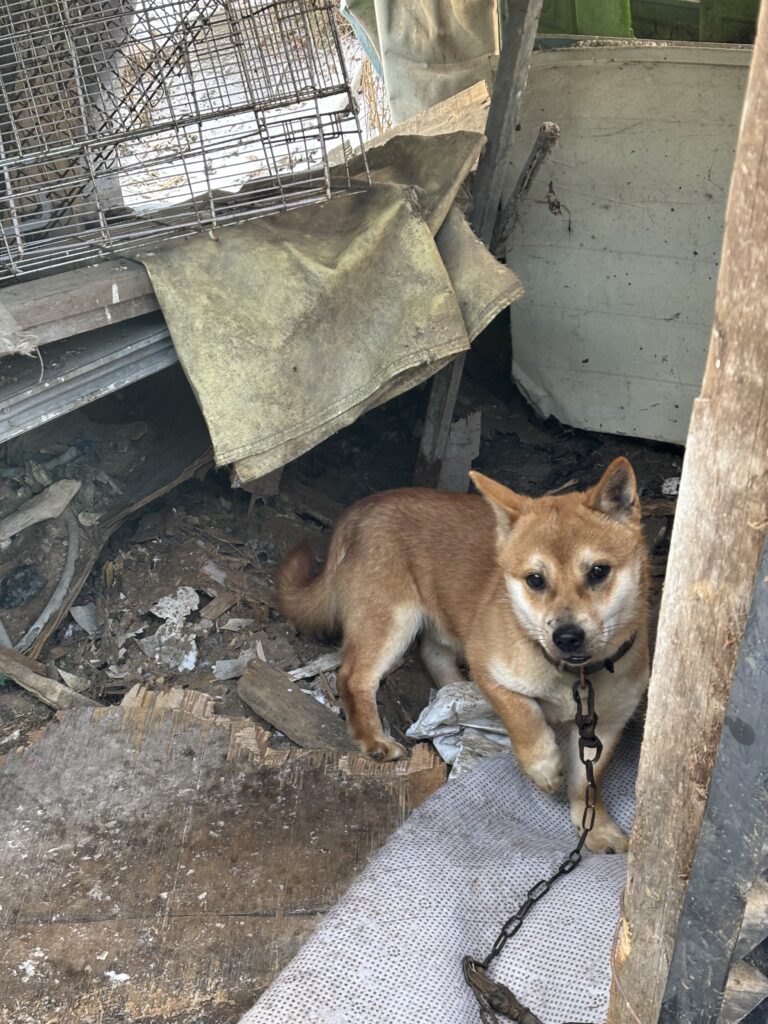
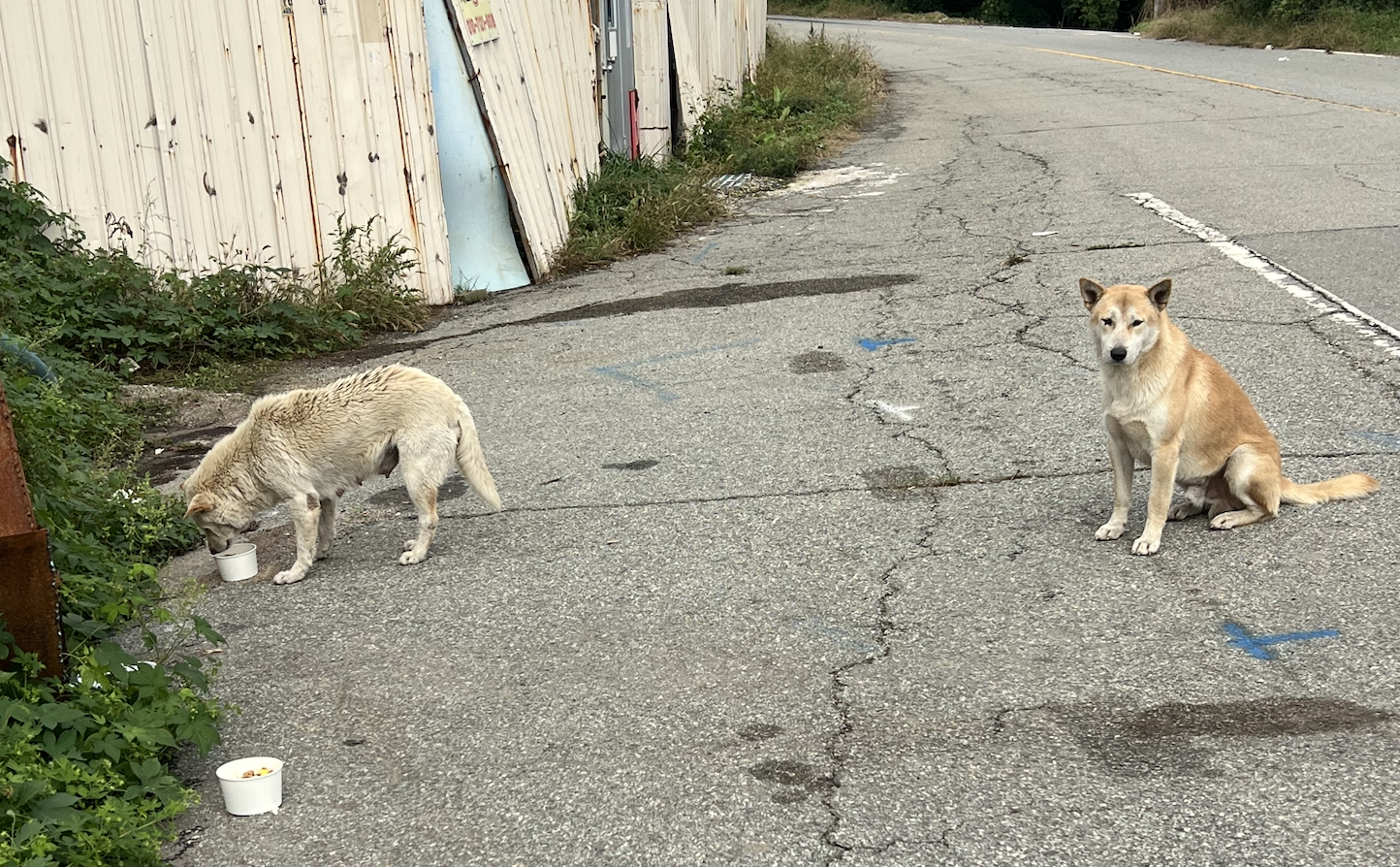
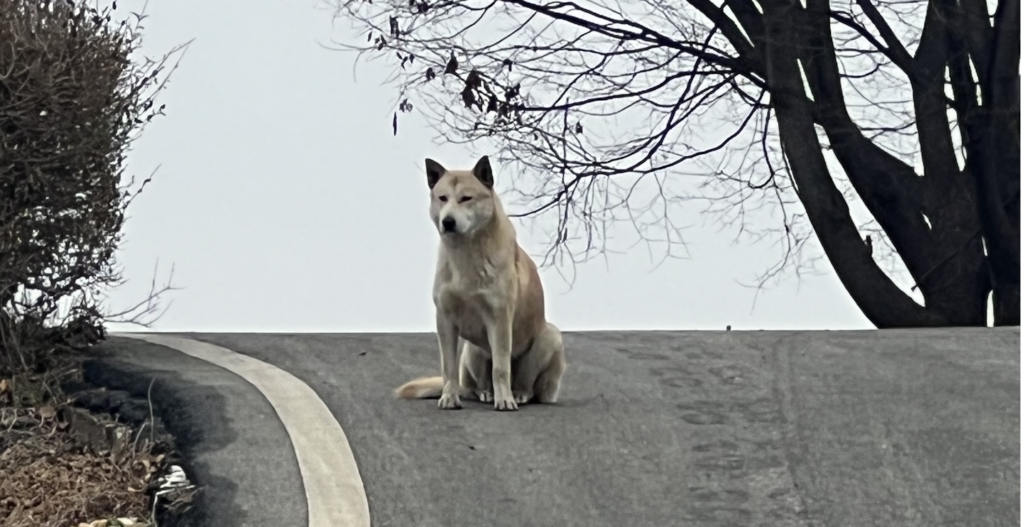
For years, two dogs survived on the streets of Pyeongtaek because two people refused to give up on them. Elise and Tom, Americans living nearby, fed them every single day. They watched over them through the seasons. And as time passed, they worried constantly as both dogs began to suffer.

The mother was living with a painful vaginal prolapse. Her son later injured his leg and could no longer bear weight. Both dogs were declining, and without intervention, their future was terrifyingly uncertain.

After reaching out everywhere for help, Elise and Tom contacted us.

This rescue was not just about saving two dogs. It was about honoring the people who cared for them quietly, patiently, and selflessly for years, and making sure their worry finally turned into relief.

Nova and noah
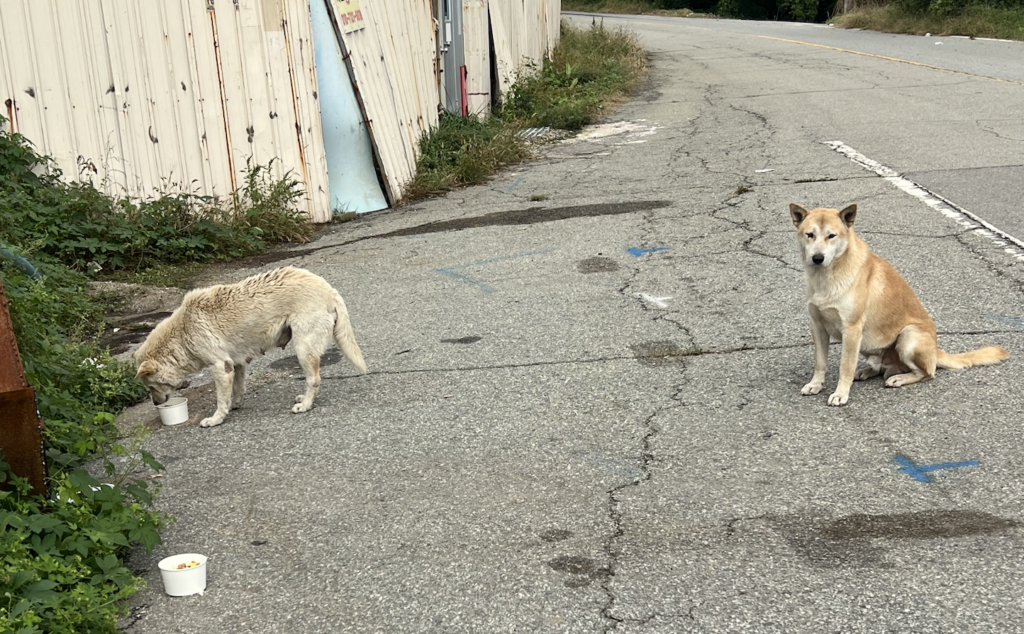
Named by their feeders and finders, Elise and Tom, these two have already been through more than any dog should.

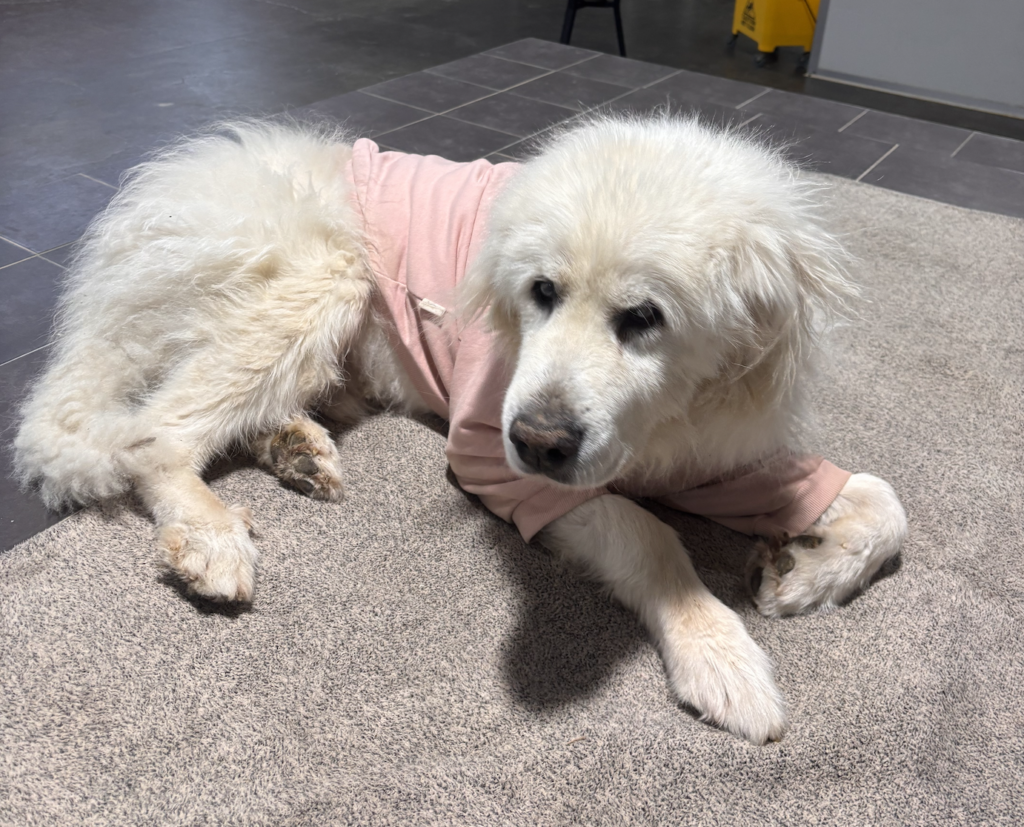
Nova, the mom, appears to have been owned before. She is gentle, calm, and trusting. Just one day after rescue, she underwent successful surgery for a uterine prolapse and was safely spayed. She is healing well and finally comfortable.

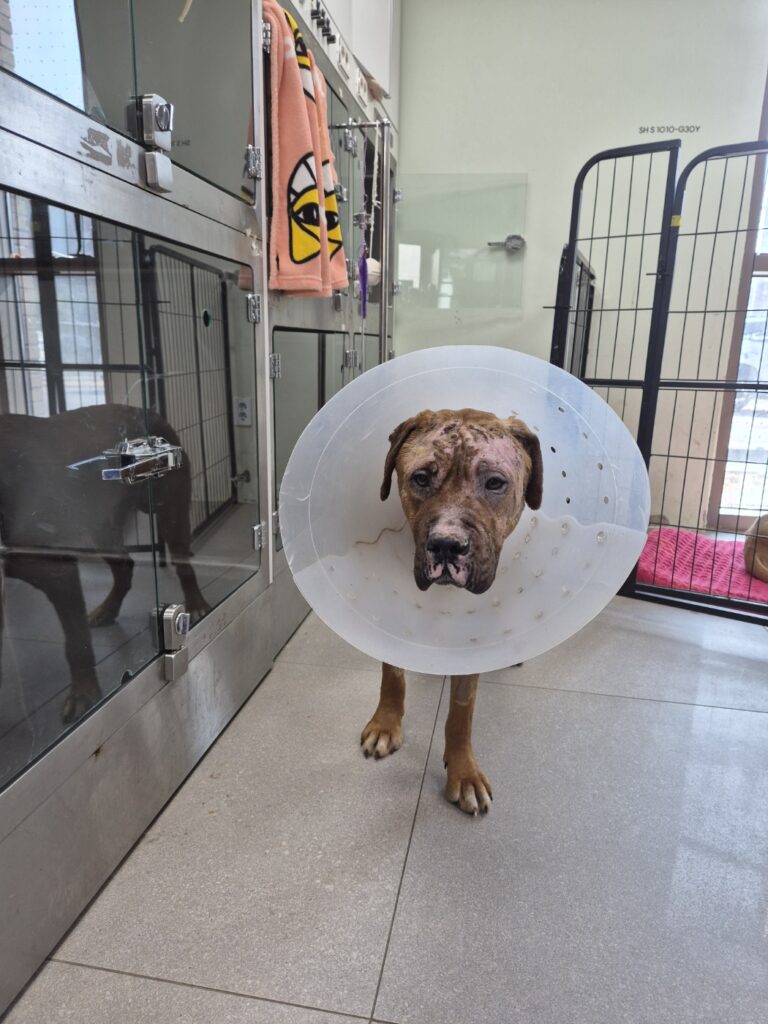
Noah’s case was much harder. Our veterinarians believe he was hit by a car months ago, leaving his pelvis and hip badly damaged. He lived in constant pain and could not bear weight, and even gentle human contact hurt.

Our orthopedic vet performed an FHNO surgery to preserve his leg. There was extensive damage, but the most important goal was giving Noah a pain-free life. The surgery was successful, and we are hopeful he will continue to improve day by day and eventually bear full weight.

what comes next

Recovery will be long for both Nova and Noah.

They are now safe, cared for, and surrounded by love at our Bundang center. For the first time, they are being seen not as street dogs, but as lives that matter.

We are deeply grateful to Elise and Tom for never looking away, and to our incredible community for stepping up to support their care.

If you are able, please consider becoming a monthly donor. Monthly support is one of the most meaningful ways to help long-stay and special-needs dogs like Nova and Noah receive the care they need for as long as it takes.
The road ahead is long, but it will be worth it.
Hero img

Christmas in Bundang: The Dogs Who Stay

Christmas in Bundang: the dogs who stay

Every December, we share a glimpse into life at our rescue center and sanctuary in Bundang, South Korea.

This year, we did something different.

Christmas in Bundang: The Dogs Who Stay is not about transition or adoption journeys. It is about the dogs for whom Bundang is not a stepping stone, but a lifelong home. Our seniors. Our disabled dogs. Those who need ongoing medical care, behavioral support, or simply the safety of consistency for the rest of their lives.

For these dogs, Bundang is where mornings begin the same way every day. Where routines are familiar. Where caregivers know every preference, every fear, every quiet joy. It is where dignity is protected, and where love is not conditional on outcome.
This is their world.

The heart of bundang

Our Bundang Center is led by Ms. Kim Hyun-You, President of the KK9R Bundang Center, alongside an extraordinary team of caregivers and trainers who work around the clock. They are there 24/7, providing stability and compassion to dogs who have known profound neglect, trauma, or loss.

We could not do this work without them.

Bundang exists for dogs who may never leave. Dogs who are too old, too fragile, too sick, or too afraid to start over somewhere new. While many dogs pass through our care on their way to families, some stay forever. And that is not a failure of the system. It is the reason Bundang exists.

Terry

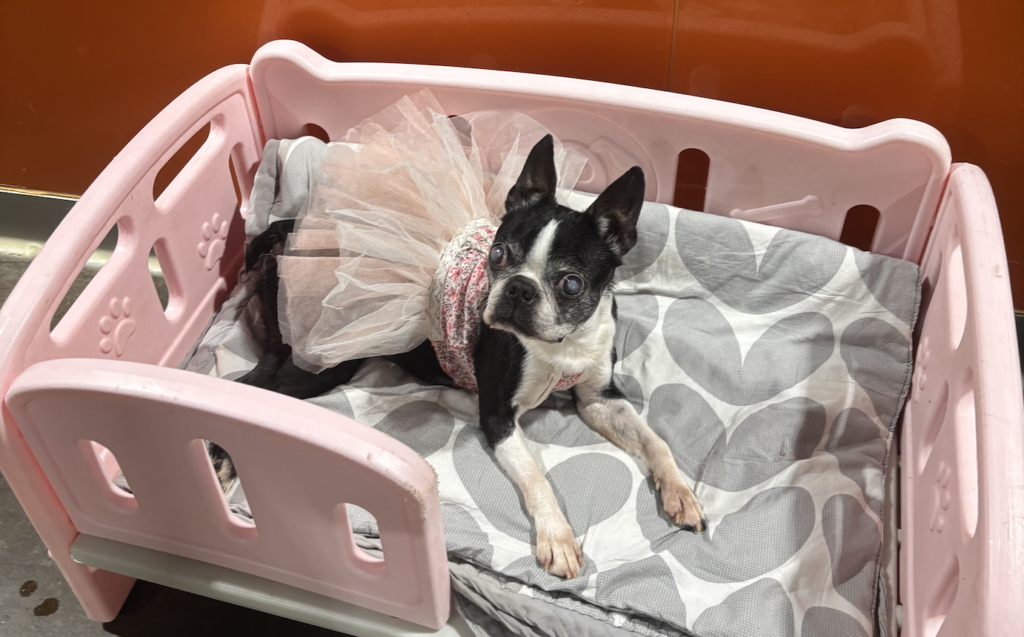
Terry is a Boston Terrier rescued from one of the worst illegal puppy mills in Busan. Years without medical care caused her to lose her sight. She is believed to be eight or nine years old.

Despite everything, Terry is warm-hearted, affectionate, and trusting. She moves through the world with confidence guided not by vision, but by memory, scent, and love. She enjoys her meals, roams the center with her friends, gives endless kisses, and reminds us daily what resilience looks like.

Terry still has many years ahead of her. While Bundang will always be a safe home for her, we still hope her story reaches someone who can offer her a family of her own.

Taeyang

For eight years, Taeyang lived confined inside a small box on the side of a rural road.

When he was rescued in 2023, his body had weakened so severely that he could barely walk. He was already old, and he had endured more than anyone ever should.

Today, Taeyang is gentle, calm, and steady. He spends his days resting in warm corners, moving at his own pace, and offering a quiet presence to everyone around him. He holds no resentment toward people, only softness.

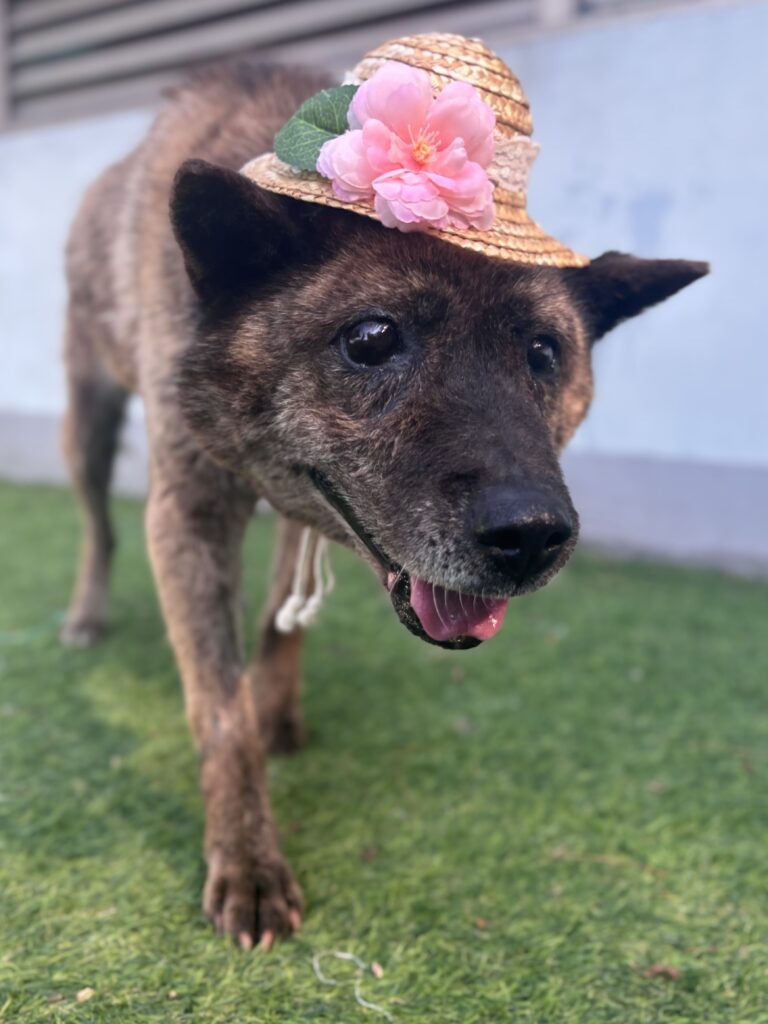
Taeyang is believed to be about ten years old and is the oldest dog at our Bundang center. He is not waiting for adoption. Bundang is his family, and it is where he will live out his remaining days in comfort and peace.

Orr

For nearly ten years, Orr lived tied outside the gates of the largest puppy mill in Korea, known as Mars. While 1,427 breeding dogs were trapped inside, Orr was left outdoors to guard the facility. Forgotten, even as the place itself became infamous.

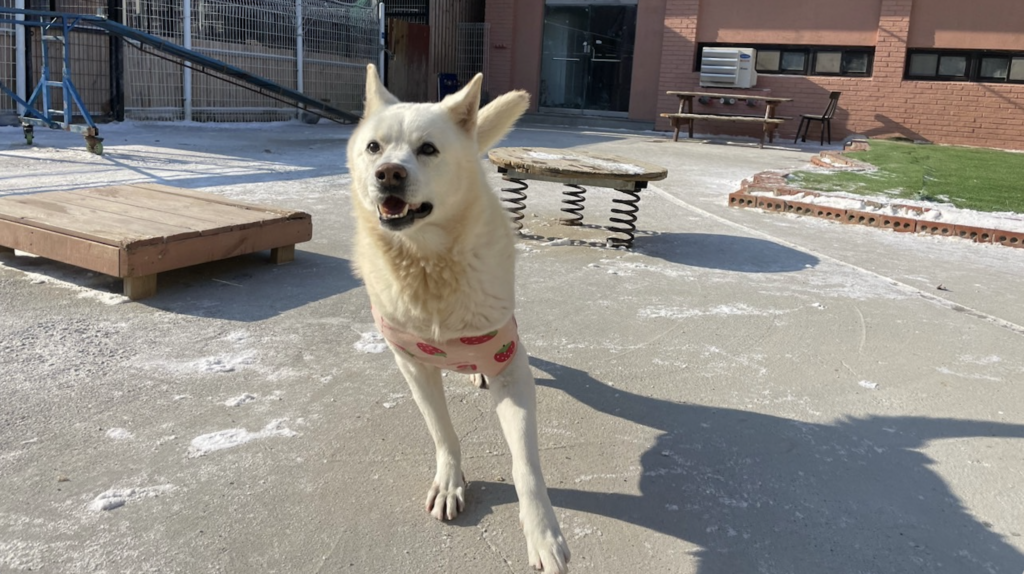
Today, Orr is an elderly Jindo living safely at Bundang. He is calm, social, and deeply gentle. Indoors, he loves to rest and quietly ask for affection. Outdoors, he surprises everyone with bursts of joy and playful energy.

Despite his large, imposing presence, Orr is exceptionally kind, especially with people and small puppies. Under the care and training of Choi Joo Won, his life is now defined by peace instead of duty.
Bundang is home to dogs like Orr. Dogs who were used, neglected, or forgotten, and who deserve safety and respect for the rest of their lives.

olivia

Olivia was rescued in 2023 from an animal hoarding case in Gyeonggi Province. Around twenty animals were found living in severe neglect, suffering from skin disease caused by years of indiscriminate breeding. They were called “zombie dogs” when discovered. What they truly were were lives abandoned by humanity.

Olivia is seven years old. When she arrived at Bundang with her siblings, she was frightened, unsure, and lacked basic social skills. Healing took time. So did trust.

Today, Olivia is lively, expressive, and affectionate. She loves people, shows her emotions openly, and carries her soft, dandelion-like fur with confidence. While Olivia is now ready to meet a family of her own, some of her siblings are still healing and learning what safety feels like.

Bundang exists for dogs at every stage of this journey. For those preparing for a second life, and for those who need as much time as it takes.

dave

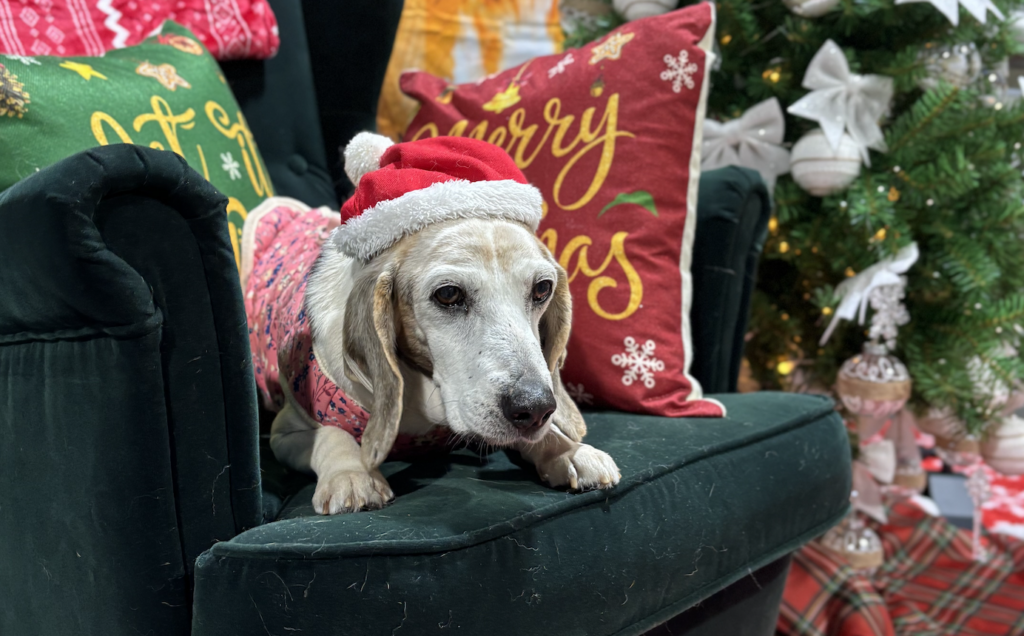
Dave the Beagle was rescued from the same illegal puppy mill as Terry. Years of neglect left him with heart disease, a tumor, and an anal prolapse. Through surgery, treatment, and time, Dave recovered far beyond what anyone expected.

Today, Dave lives at Bundang, which serves as both a rehabilitation center and a nursing home. It is where he feels safe and unhurried.

Estimated to be about ten years old, Dave is a senior dog with the heart of a puppy. He loves rolling onto his back against cushions, wandering quietly, watching people, and enjoying simple comforts. While he has not yet found a family of his own, we still hold hope that a miracle may be waiting for him.

shushu

Shushu has lived at our Bundang center for as long as we can remember.

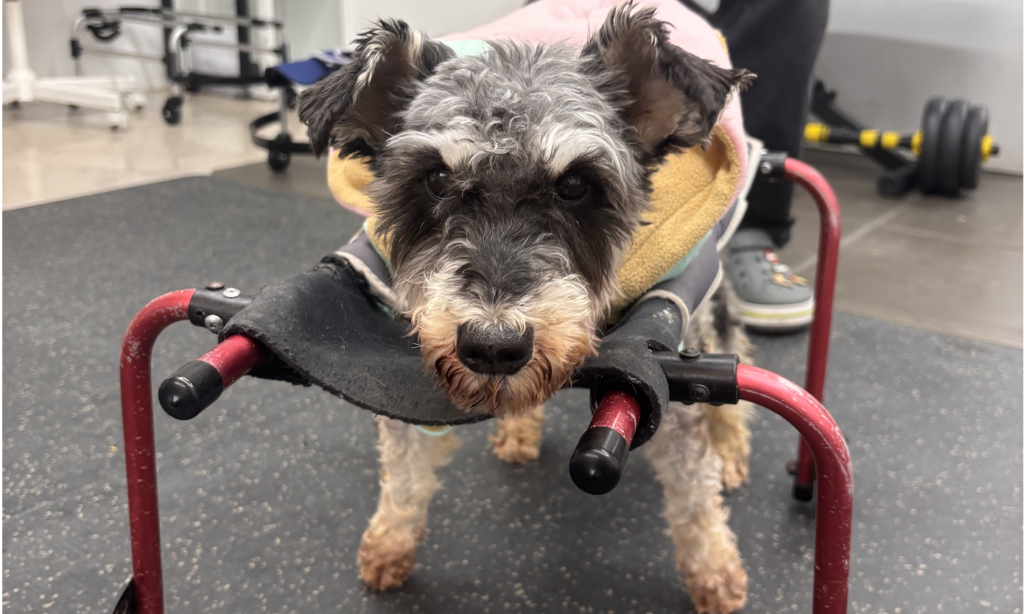
She has cerebral atrophy, a neurological condition that affects balance, coordination, and mobility. She cannot stand on her own, but she is far from confined. With her custom-built wheelchair, Shushu moves freely through the center, choosing where to go, what to observe, and where to rest.

Since her rescue three years ago, Shushu has remained happy and healthy thanks to the dedication of our staff and volunteers. Like many dogs at Bundang, she may never be adopted. The people here are her family, and Bundang is her home.

sunny

Sunny is a ten-year-old senior rescued from the Andong wildfire disaster site. When she was found, she was in critical condition. Parasites had severely damaged her eyes, and despite extensive care, she lost her vision entirely.
Sunny arrived blind, sick, and elderly. And still, she chose life.

Today, Sunny navigates the world with confidence. She follows scents, recognizes familiar voices, and comes running when called, especially if food is involved. Under the care of her dedicated trainer, Choi Joo Won, Sunny continues to adapt and enjoy life in her own way.

Sunny’s story also inspired Liberation 1M, our initiative focused on improving conditions for rural and yard dogs through spay and neuter, deworming, and long-term systemic change. Because of her, 160 dogs in rural Andong have already received critical veterinary care.

how you can help

Our Bundang Center runs entirely on donations and monthly sponsorships.

The dogs who stay rely on us for lifelong care, medical treatment, rehabilitation, and daily dignity. If their stories moved you, please consider becoming a monthly sponsor or making a one-time donation to support their lives.

Standing with the dogs who stay means choosing compassion without conditions. It means honoring lives that the world once overlooked. And it means ensuring that Bundang remains a place of safety, peace, and love for as long as these dogs need it.
Thank you for standing with them.

Hero img

From Wildfire to Warmth: Phoenix’s Journey Home

From Wildfire to Warmth: Phoenix’s Journey Home

This holiday season, we’re honoring the incredible rescue stories that made 2025 unforgettable, starting with Phoenix.
Phoenix was found clinging to life in the aftermath of a devastating wildfire in South Korea, surrounded by her newborn puppies and thick smoke. Her fur was singed, her paws raw from the heat, but she refused to leave her babies behind.
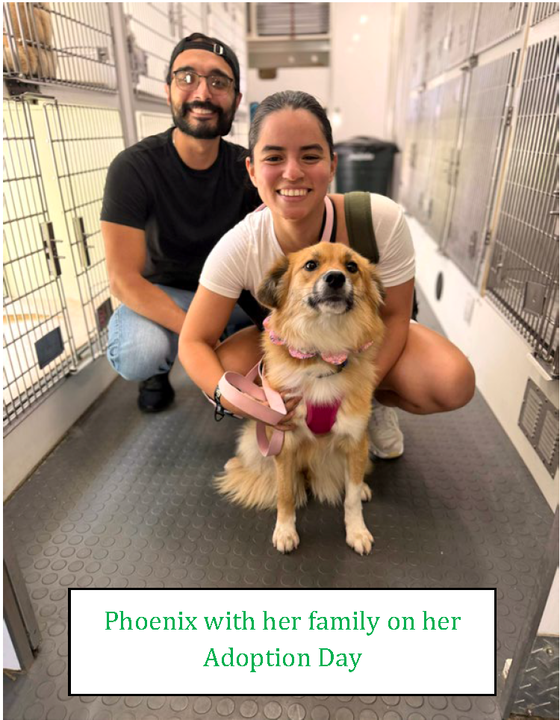
Thanks to our rescue partners on the ground and your support, Phoenix and her entire litter were flown to safety and given the medical care they so urgently needed. One by one, her puppies found loving homes. And Phoenix, gentle, resilient Phoenix, was adopted into the kind of home every dog deserves: warm, patient, and full of love.
To celebrate Phoenix’s journey and the many others like hers, we’re launching our Phoenix Holiday Campaign. Every donation helps us continue this work and for any gift of $25 or more, we’ll mail you a limited-edition commemorative Phoenix pin as our thank-you.

How to Get Your Pin:
• Donate $25+ on our site or through Instagram
• DM or email us your mailing address
• We’ll ship your pin as a token of your support
Your generosity gives dogs like Phoenix a second chance, and we hope this pin reminds you of the impact you’ve made.
Let’s keep going. Let’s make 2026 a year of even more rescues, reunions, and happily-ever-afters.

Hero img

Operation Freedom Paws: 300 Dogs Saved in Ganghwado

Inside the Shutdown: 300 Dogs Rescued from Government-Sanctioned Puppy Mill in South Korea

On July 23rd, 2025, our team joined a massive, coordinated effort on the ground in Ganghwado, South Korea, to shut down a government-sanctioned puppy mill — one of the worst we’ve seen.

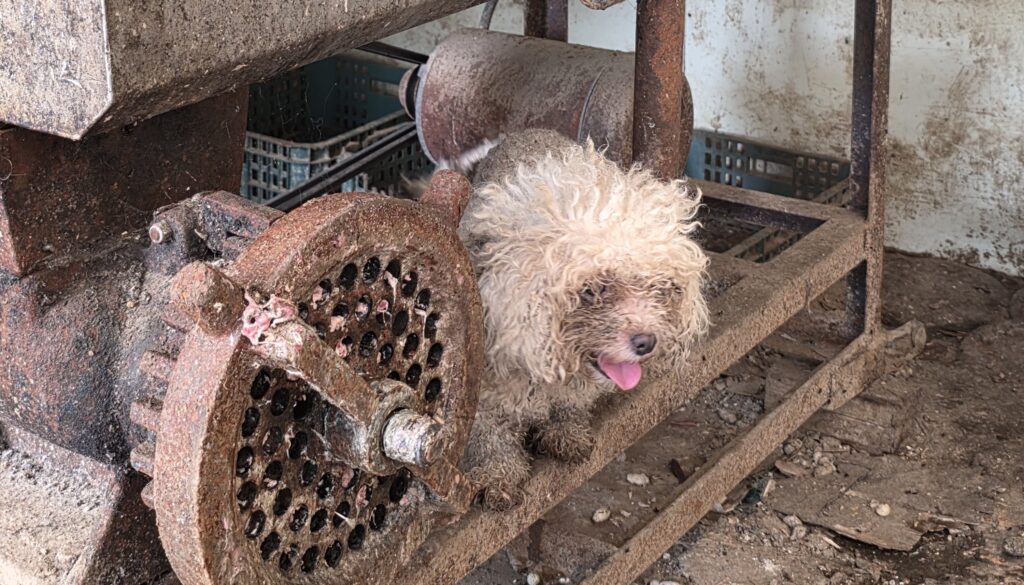
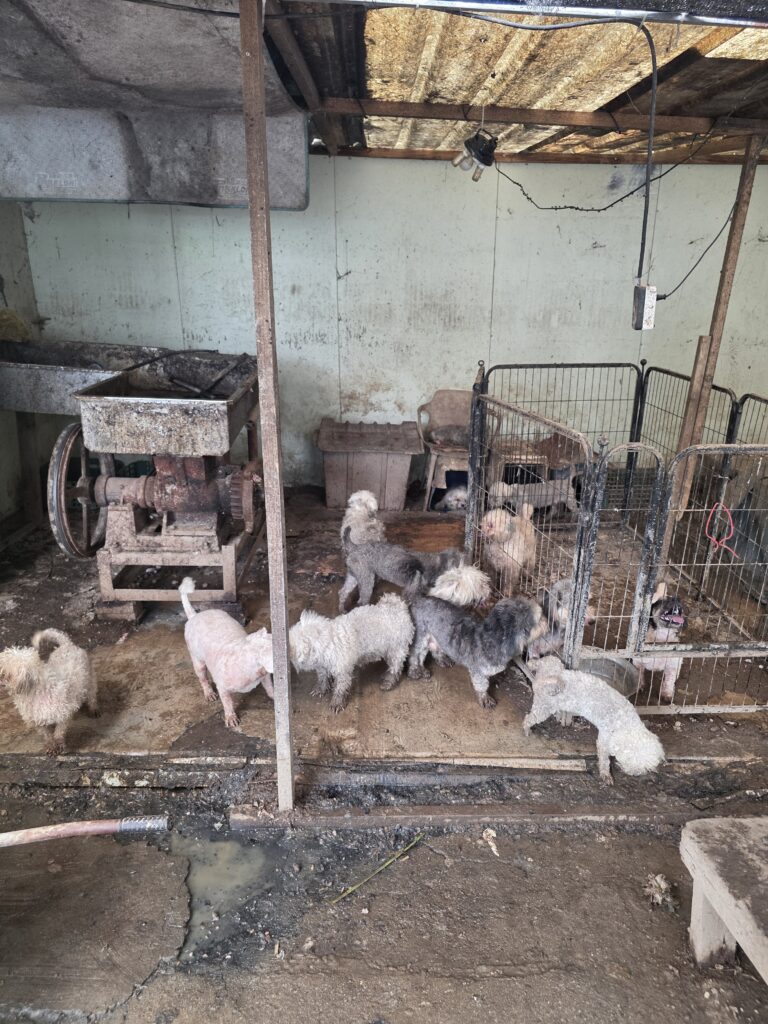
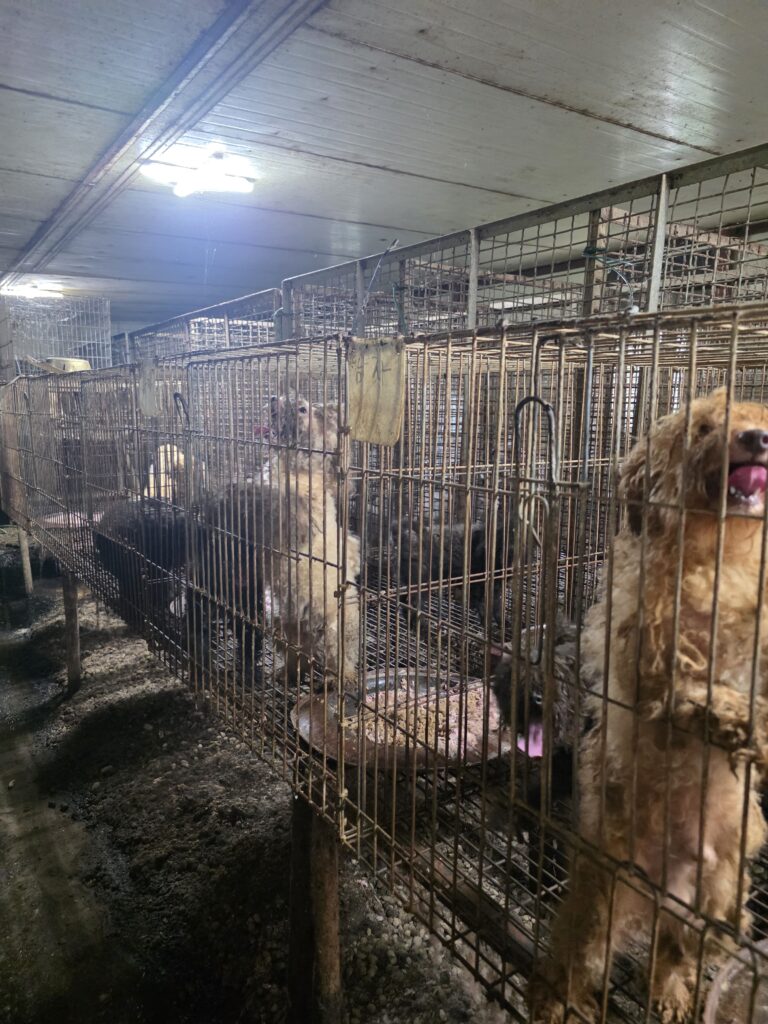
Cages were stacked on top of one another. Dogs stood in their own waste, matted, sick, and shaking. The smell of feces and stagnant water filled the air. There were mothers nursing litters in the dark, surrounded by rotting food and rusted wire. This wasn’t hidden in the countryside. It was legal — operating in plain sight with a government seal of approval.

But not anymore.

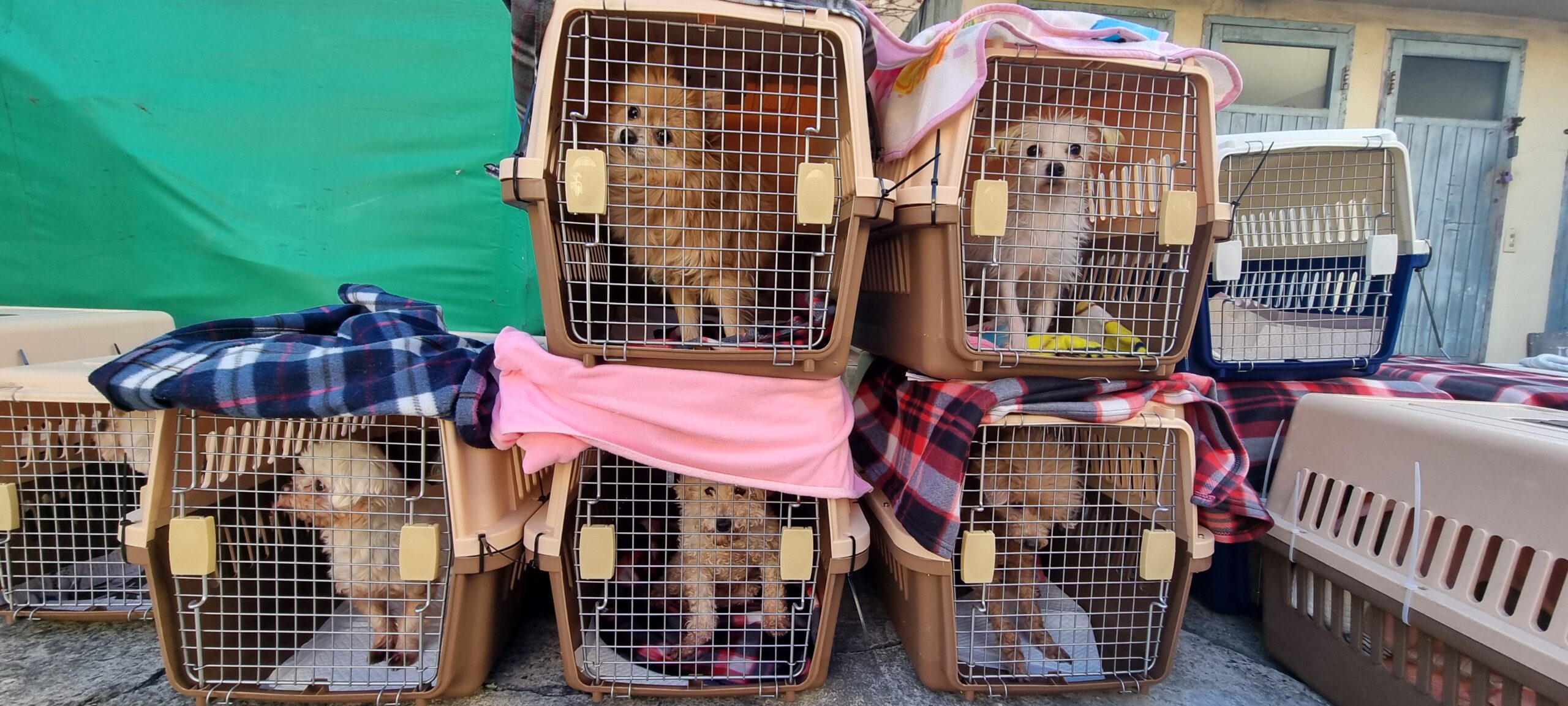
Korean K9 Rescue was one of 11 rescue groups that mobilized to dismantle the operation. Together, we got every single dog out. Over 300 dogs were rescued. Our team took in 40 of them. These dogs have lived in filth and fear, bred repeatedly for profit and denied medical care. Now, for the first time, they are safe.

We’re calling this Operation Freedom Paw — because that’s exactly what it is.

Donate Today

We’ve already begun emergency intake. Some of the dogs are still too shut down to make eye contact. Others clung to us the moment we opened their crates. They don’t know it yet, but their lives just changed forever. We’ll be sharing updates in the coming days as they begin their recovery — and eventually, their journey to New York.

In the meantime, we need your help. These rescues take everything — time, resources, and compassion. Please consider donating to help cover medical care, transport, and ongoing rehabilitation.

Every dollar helps give these dogs the future they’ve never had.

This is what rescue looks like.
This is what it means to shut it down.

💥 Update: A formal complaint has been filed against the puppy mill operator, and his license is now under review. Authorities expect it to be revoked soon.

Donate Today

Hero img

Operation 1M: The Road to Andong

Operation 1M: The Road to Andong

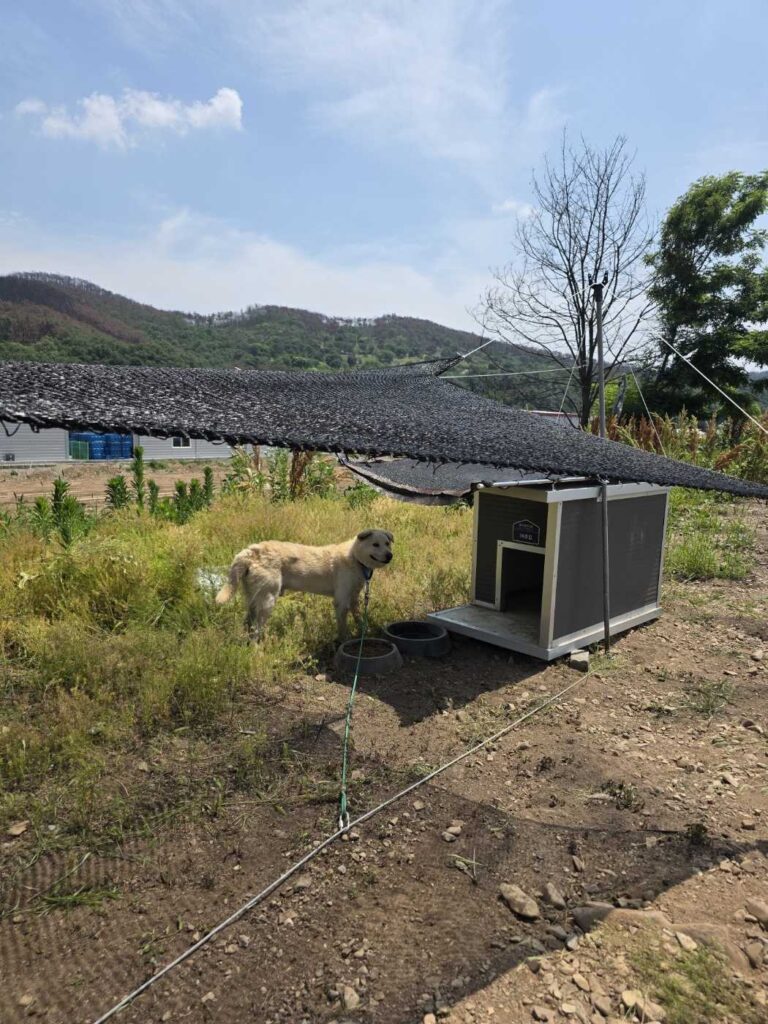
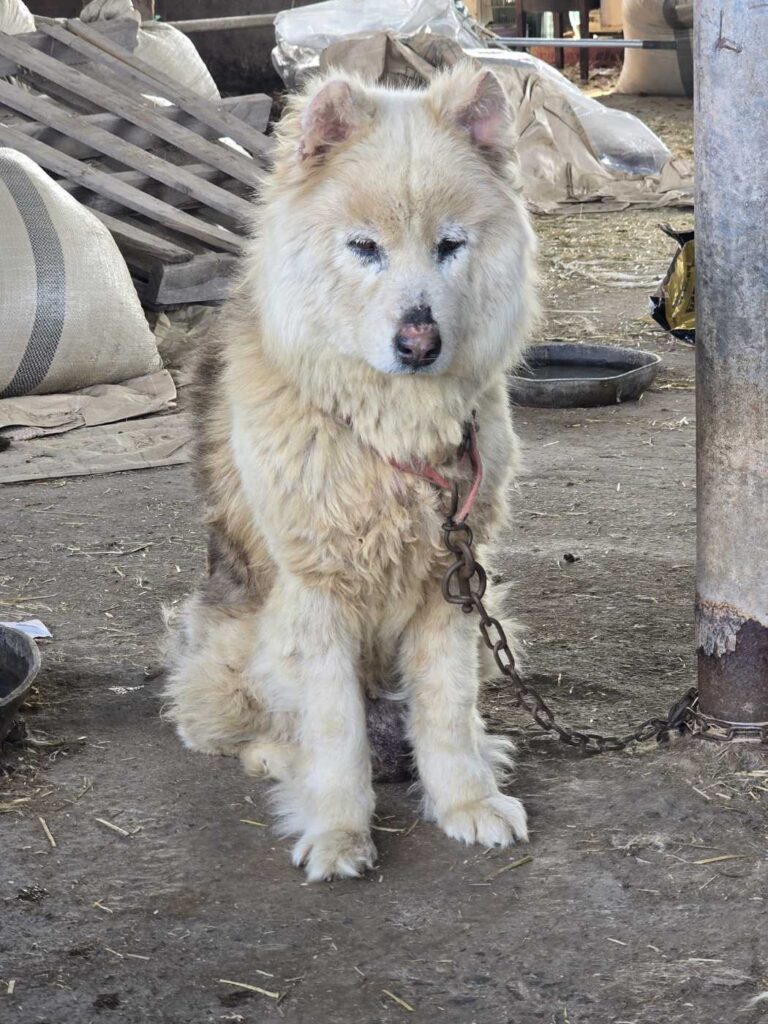
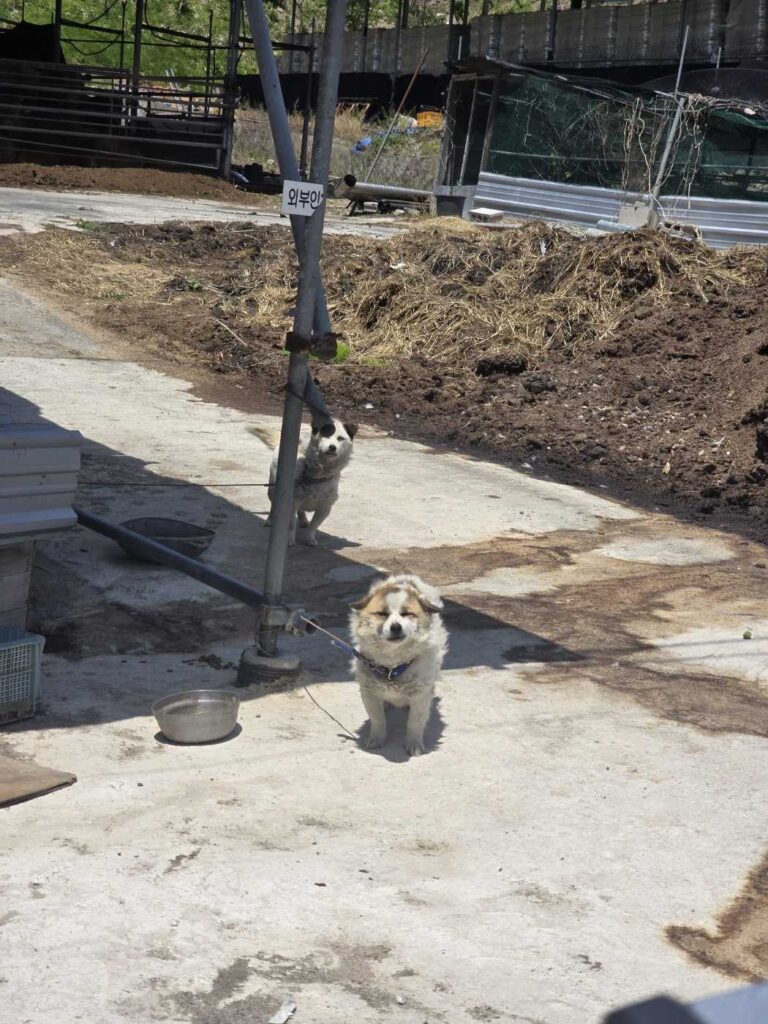
In rural South Korea, thousands of dogs live tethered on short one-meter (3 ft) chains – left out in the elements, unable to move freely, and often forgotten. These chains are not just physical restraints. They represent a lifetime of confinement, neglect, and suffering.
At Korean K9 Rescue, we believe every dog deserves better. That’s why we launched Operation 1M.

A New Mission After the Fires

In March 2025, wildfires swept across Gyeongsangbuk-do Province, devastating entire communities – including farms where dogs were chained and left behind. More than 700 dogs perished in just one fire in Andong. The scale of the loss was staggering, and the aftermath revealed a deeper, ongoing crisis: countless field dogs still live in silence across rural Korea, tethered and exposed, with no access to shelter or medical care.
These aren’t isolated cases. They’re a systemic issue tied to cultural practices, economic hardship, and the absence of enforceable welfare laws.

What We’re Doing

Since April, our team has been working directly in rural regions like Andong and Cheongsong County – places hit hard by both wildfire and neglect. In just 45 days, we’ve:

These small steps are already making a big impact. Dogs who once lay on bare earth under burning sun now have a shaded space to rest. Dogs who were completely immobilized by chains now have the freedom to stretch, move, and interact.
We’re not just building houses. We’re building hope.

Why It Matters

Field dogs in Korea are often invisible – overlooked by policy, the public, and even many rescues. But their suffering is no less urgent.
We’ve seen the consequences of inaction firsthand. After the fires, we rescued dogs burned, starving, and barely alive. Some, like Phoenix, shielded their newborn puppies through smoke and flames. Others, like Guwon, survived among the bodies of hundreds who didn’t.
This new phase – Operation 1M – is our commitment to preventing the next tragedy.

A Call to Action

We can’t do this alone. Every doghouse, every rope, every veterinary treatment costs time and resources. And there are thousands more dogs still waiting.

Your support helps us continue this mission – one dog, one house, one chain at a time.

Hero img

AFTER THE FIRE: SEVEN SURVIVORS FROM ANDONG

After the Fire: Seven Survivors from Andong

Content warning: This post includes images and descriptions of animal suffering.
Last month, a wildfire tore through a dog meat farm in Andong, South Korea. Over 700 dogs died. Only seven survived.
Last week, Gina, KK9R Director and Vicky, our Rescue Manager, traveled to South Korea to see the aftermath firsthand. They visited Mapo-gu Emergency Hospital in Seoul, where one of the survivors—a female Tosa named Guwon—is being treated for second-degree burns across her face and body. She was found beside the remains of the dogs who didn’t make it. Her condition is serious. So is what it represents.
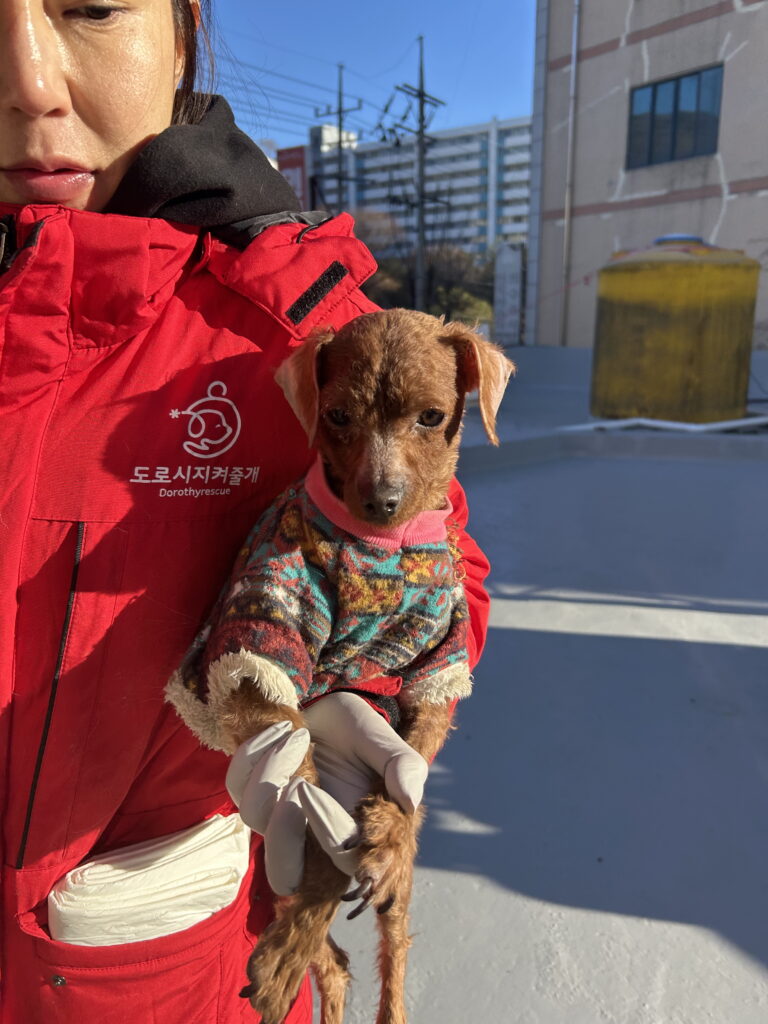
This wasn’t just a fire. It was the result of an industry that still cages dogs in silence, even as the country moves to shut it down. Farms like this one still exist. Dogs like Guwon are still inside.
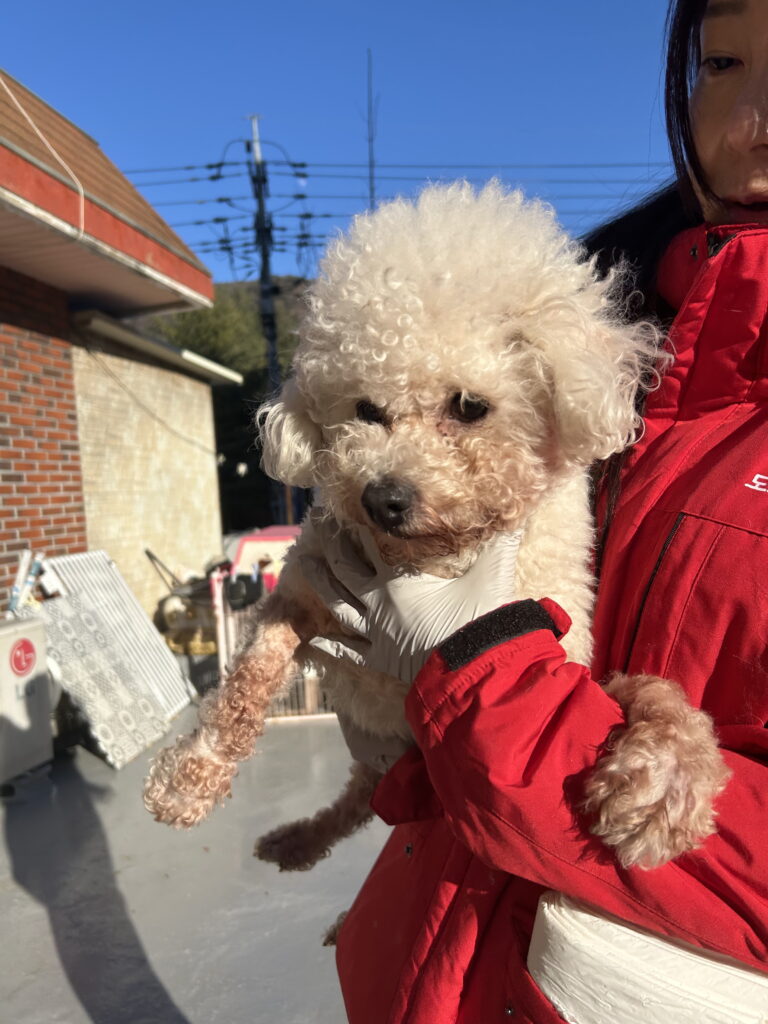
What happened in Andong isn’t isolated—and the only reason any of these seven dogs made it out is because people refused to look away.

The Teams Behind the Rescue

The response to this tragedy has been led by people on the ground who refused to give up.
Guwon—and the six other surviving Tosas—are alive today thanks to:
The tireless efforts of our Korean team (@kk9r.kr)
The on-the-ground coordination and care provided by Lucy’s Friends
And the ongoing support and compassion from Humane World for Animals (formerly HSI)
Next month, all seven dogs will be flown to the U.S. to begin the next phase of their recovery.

What comes next

These dogs are going to need time, structure, medical care, and patient fosters. They’ve experienced severe trauma. We don’t expect quick fixes, but we’re ready to walk them through it—step by step.
We’re preparing now to welcome them and give them a safe space to start over. We’ll be sharing updates as they arrive.

How to help

If you’ve been following this story and wondering how to contribute—this is the moment.
• Support their recovery with a donation
• Open your home as a foster
• Share their story to help push the industry further into the light

These seven dogs made it out. Most didn’t.
We’re carrying their memory forward—through the ones who survived.

Hero img

Jindo Journey Training Stipend

Jindo Journey Training Stipend: Supporting Successful Adoptions

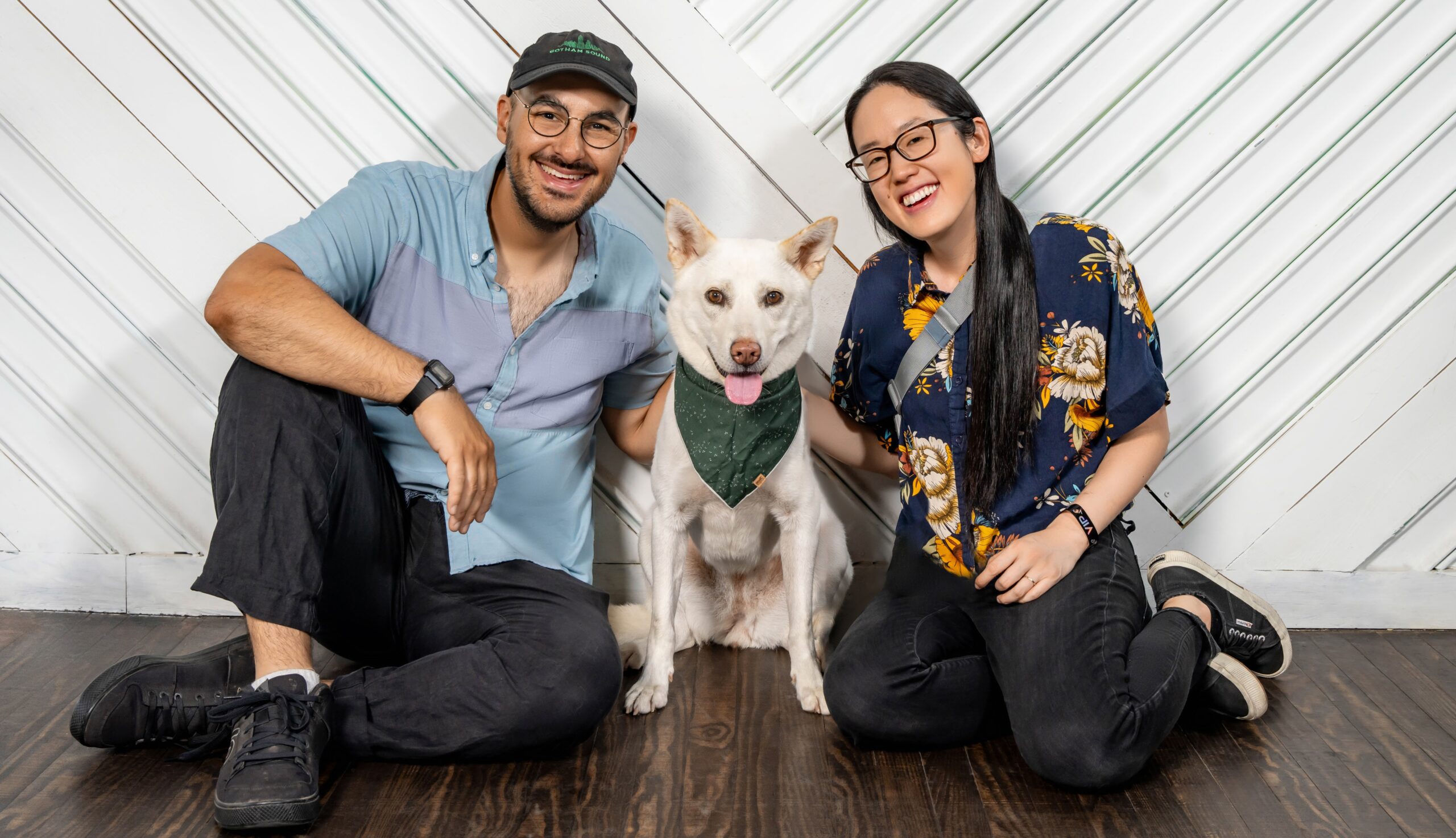
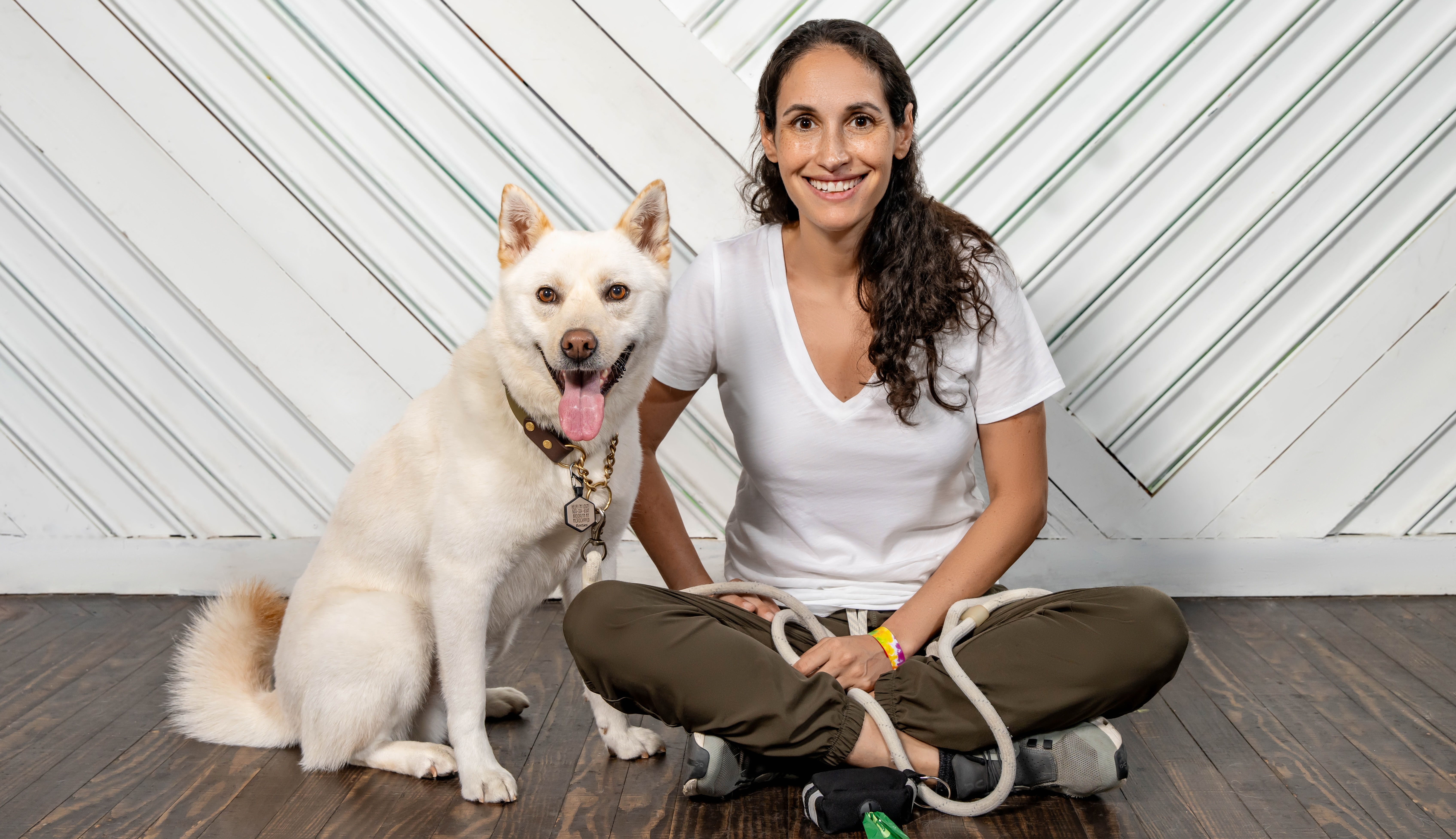
At Korean K9 Rescue, we’re thrilled to announce the launch of our new Jindo Journey Training Stipend! This initiative is designed to support the adoption of Jindo mixes and local shelter dogs, especially those over 25 lbs, who often face challenges adjusting to new homes due to their past experiences.

What is the Jindo Journey Training Stipend?
Thanks to a generous private donor, we’re able to offer a $300 stipend per eligible dog to help cover the cost of two vital training sessions. For local NYC shelter dogs, the fund will cover the complete training package based on their needs. We’ll even assign one of our recommended trainers based on your location and your dog’s needs.

Why is Training Important?
Training is a crucial part of helping your adopted dog adjust to their new home and build a strong bond with you. Our Jindo Journey Training Stipend aims to make training more accessible and affordable, setting both dogs and adopters up for success.

Who is Eligible?
This fund is available for Jindo mixes or local shelter dogs over 25 lbs who have been adopted into homes in the NYC area, including Westchester and Jersey City. Foster fails are also eligible with approval.

How Does it Work?
When you adopt an eligible dog, you’ll work with one of our recommended trainers to schedule your sessions. The stipend will cover the cost of the first two sessions, and you’ll be responsible for any additional sessions your dog may need.

Ready to Adopt?
Visit our website at koreank9rescue.org/adopt to learn more about our dogs and the adoption process. You can also find more information about the Jindo Journey Training Stipend and how to apply.
We’re excited to help more dogs find loving homes and make their adoption journeys a success!

Hero img

Could This Be Seoul’s Last Dog Meat Farm? 11 Lives Saved

Gangnam slaughterhouse survivor

A shuttered dog meat farm in the heart of Seoul marks progress, but with hundreds still operating, the fight to end this cruelty is far from over.

In Gangnam, Seoul, less than a mile from towering luxury high-rises, a grim reality persisted—until now. Hidden in the shadows of one of the city’s redevelopment districts, a dog meat farm continued to operate, a stark contrast to the modern skyline surrounding it.  

But this week, alongside our local rescue partners, we shut it down for good.  

Eleven dogs—who had known nothing but suffering—are now safe. These dogs endured freezing temperatures, starvation, and the constant fear of slaughter. But now, this land will never be used for dog meat farming again. Thanks to rezoning and redevelopment, this farm is gone.  

But the question remains: Could this be Seoul’s last? 

A Dying Industry That Won’t Let Go 

While this farm has closed, hundreds more still exist across South Korea, especially in rural areas. The nationwide dog meat ban is set to take full effect in 2027, but the industry isn’t letting go without a fight. Instead of phasing out, dog meat farmers are holding onto their remaining dogs, leveraging them for government subsidies in a failing trade.  

These dogs are no longer just livestock—they’ve become negotiation pawns. For years, farmers have demanded financial compensation for shutting down their businesses. And now, as the end nears, they are stalling for even bigger payouts, keeping dogs trapped in a system that should have ended long ago.  

If we don’t act now, we could see a last-minute crisis—a mass abandonment of dogs as farms rush to close before the deadline.  

We Can’t Wait Until It’s Too Late  

This rescue was a victory, but we can’t stop here. With your help, we’re working to:  

Expand rescue operations in rural areas where farms are still active.  

Push for stronger enforcement and earlier closures.  

Provide medical care, rehabilitation, and adoption for rescued dogs.  

This farm is gone. But there are still cages left to open.  

Be Part of Ending This for Good  

💙 Donate to fund lifesaving rescues.  

💙 Adopt and give a survivor a loving home.  

💙 Share this story and keep the pressure on.  

The skyline of Seoul is changing. Let’s make sure the future no longer has room for this cruelty.  

#EndDogMeat #RescueMission #UntilEveryCageIsEmpty #KoreanK9Rescue

Hero img

Operation Hope Haven: The Rescue of Busan's Betrayed Dogs

Busan South Korea rescue dogs

Exposing Cruelty, Restoring Hope: A Mission to Save Busan’s Forgotten Dogs

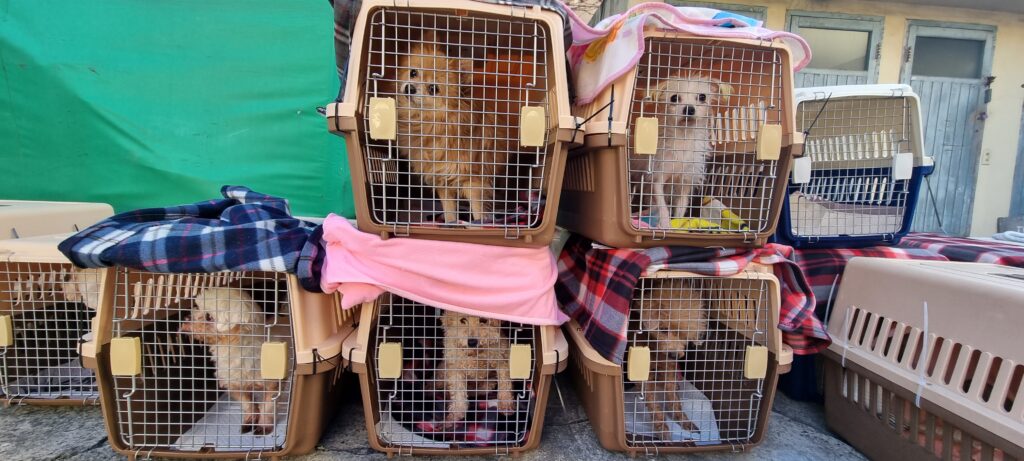
On January 12th, Korean K9 Rescue, in partnership with Lucy’s Friends—a coalition of NGO rescues committed to ending the puppy mill trade—unveiled a shocking case of animal neglect and exploitation in Busan, South Korea. The rescue mission began after several tips revealed a chilling reality: a 70-year-old woman had been parading as a caregiver for abandoned dogs while secretly exploiting them for personal gain.

Forty-six dogs were discovered at a local grooming school, living in squalid conditions. Misleadingly labeled as “rescues,” these animals had been denied basic care and freedom. Instead, they were bred and used solely for grooming practice, enduring untold suffering. To make matters worse, this woman had been soliciting donations under the guise of helping Busan City shelter dogs, funneling the funds for her own benefit while shuffling the dogs between shelters, grooming schools, and cafes.

Korean K9 Rescue stepped in to save seven of these innocent lives, providing them with immediate medical care, rehabilitation, and a chance at a better future. The remaining dogs were safely entrusted to our dedicated partners. As Lucy’s Friends prepares to pursue legal action against the perpetrator for fraud and fundraising violations, Operation Hope Haven serves as a rallying cry for transparency and vigilance in animal welfare.

This mission sheds light on the hidden cruelties behind some so-called “rescues” in South Korea and reminds us of the ongoing fight against exploitation in the name of profit.

How You Can Support Korean K9 Rescue

Operation Hope Haven is just one example of the tireless work Korean K9 Rescue undertakes to give abused and neglected dogs a second chance at life. If you’d like to make a difference, here’s how you can help:

  1. Donate – Your contributions help cover medical care, rehabilitation, and transportation for dogs in need. Every dollar makes an impact.
  2. Adopt or Foster – Open your home to a rescue dog and give them the love and care they deserve.
  3. Spread Awareness – Share our stories and mission on social media to educate others about animal welfare.
  4. Volunteer – Join us at events or help behind the scenes with tasks like coordinating rescues or managing outreach.

Together, we can fight against animal exploitation and provide a brighter future for rescue dogs. Visit our website to learn more or get involved!

Hero img

10 Questions to Ask Before Adopting a Rescue Dog

corgi rescues

10 Questions to Ask Before Adopting a Rescue Dog

Essential Tips to Help You Find the Perfect Match and Prepare for Life with Your New Furry Friend

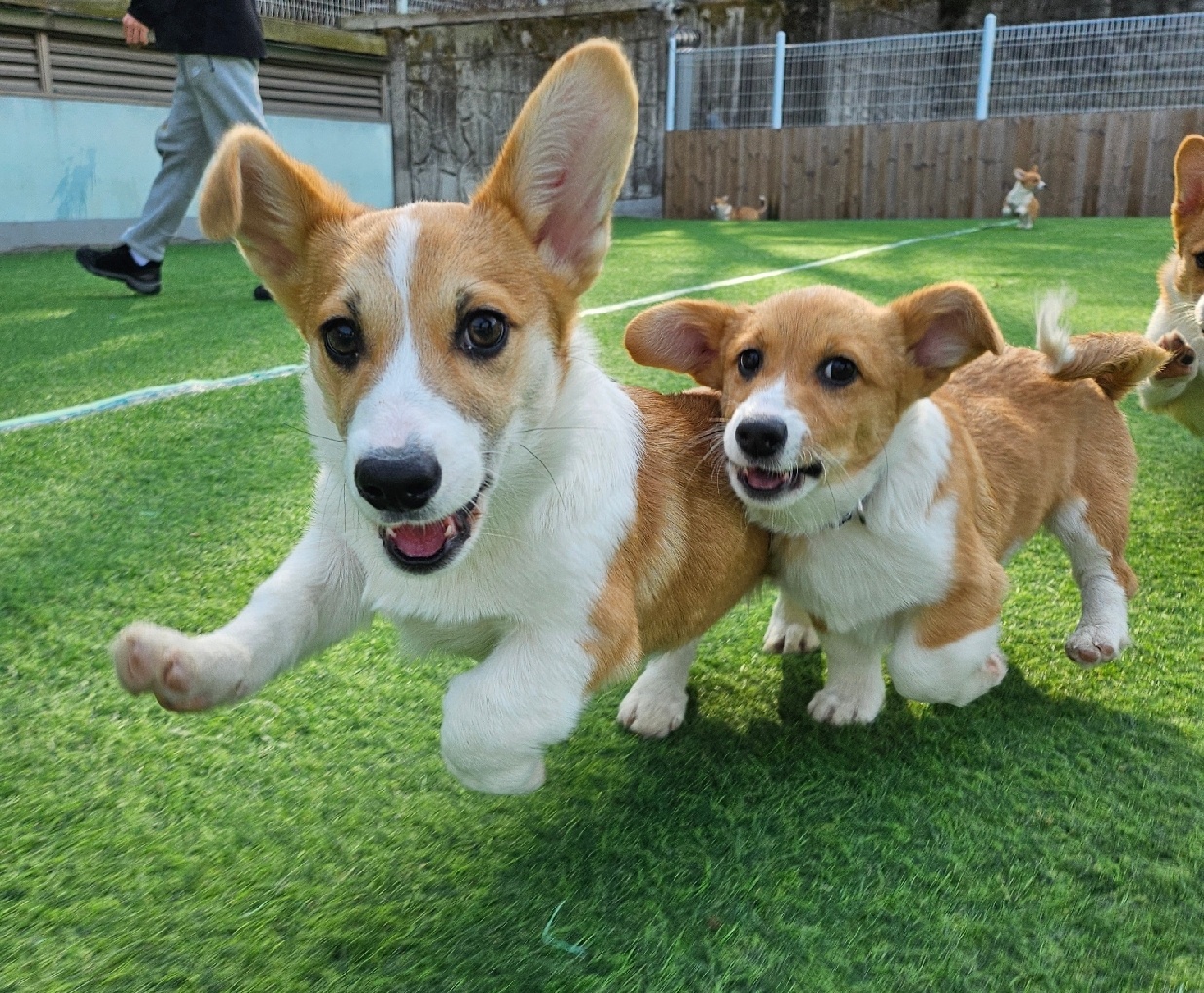
Adopting a rescue dog is a life-changing decision—for you and your new furry friend. At Korean K9 Rescue (KK9R), our dogs come from challenging environments, such as puppy mills, the dog meat trade, or high-kill shelters in South Korea, and they need compassionate adopters who are ready to help them adjust to a new life. Asking the right questions before adopting is the key to building a strong, healthy bond and setting realistic expectations for both you and your dog.

1. What is this dog’s background?

Many KK9R dogs have lived in harsh or inhumane conditions, including puppy mills or overcrowded shelters. Some may have had little to no exposure to human care, training, or socialization. Understanding where your dog comes from will help you empathize with their behavior and adapt your approach to their unique needs.

2. What are their specific care requirements?

Every KK9R dog begins their journey with a fresh food diet provided by Just Food For Dogs. These human-grade meals are thoughtfully created by veterinary nutritionists and feature high-quality, recognizable ingredients you can trust. Continuing this diet is recommended for their health. Additionally, some dogs may need special care based on their past—such as extra patience with grooming or acclimating to a leash.

3. Are there any medical needs or concerns?

Some rescue dogs arrive with health challenges, from skin issues to dental needs. KK9R ensures all dogs are vaccinated, spayed or neutered, and receive necessary medical treatments, but it’s important to discuss ongoing care. Regular vet visits and any additional checkups will help your dog thrive.

4. How do they adjust to new environments?

Transitioning to a home environment can take time, especially for dogs who’ve never lived indoors. Some of our dogs may be hesitant about new sights, sounds, or even basic things like stairs or a TV. Patience, routine, and a calm, nurturing environment are crucial during this adjustment period.

5. What is their temperament like?

Each dog’s personality is unique, shaped by their experiences and breed traits. Some dogs may be naturally shy and reserved, while others are outgoing and full of energy. For example, Jindos are known for their loyalty but can be cautious around new people. Understanding a dog’s temperament helps you determine if they’re a good fit for your home and routine, whether you’re an active family or prefer a more laid-back companion.

6. Do they get along with children or other pets?

Because of their history, many KK9R dogs haven’t been exposed to children or other animals. While we do our best to assess compatibility, adopters should be prepared for a gradual introduction and potential behavioral adjustments. Always supervise initial interactions with kids, cats, or other pets.

7. What kind of training have they received?

Most of our dogs start basic training in foster homes, including crate training. We ask fosters to follow a routine of 2 hours out and 4 hours in the crate throughout the day to build structure. However, additional training at home—such as leash training or housebreaking—will likely be necessary. Remember, consistency and positive reinforcement go a long way.

8. What type of home environment is best for them?

While some dogs adapt well to apartment living, others may need a yard or more space to roam. Discussing the dog’s energy levels, exercise needs, and temperament with KK9R can help determine if your home is the right fit.

9. Are there specific behavioral traits to know about?

Rescue dogs often carry the emotional and physical impact of their past. Puppy mill survivors, for instance, may need extra patience to adjust to potty training or leash walking due to limited exposure to these routines. Dogs with trauma may also have triggers, such as loud noises or unfamiliar environments. Being aware of these traits ahead of time helps you develop a care plan and create a safe, supportive space for your new companion.

10. What support is available after adoption?

Adopting a rescue dog is a lifelong commitment, but you’re not in it alone. KK9R offers guidance and support post-adoption, from training tips to dietary recommendations. If you ever need help, our team is just a message away.

Final Thoughts

Adopting a rescue dog is incredibly rewarding, but it’s also a big responsibility. By asking the right questions and preparing for your dog’s unique needs, you can create a safe and loving environment where they can thrive.

Ready to meet your match? Meet our adoptable dogs and take the first step toward giving a rescue dog the second chance they deserve.